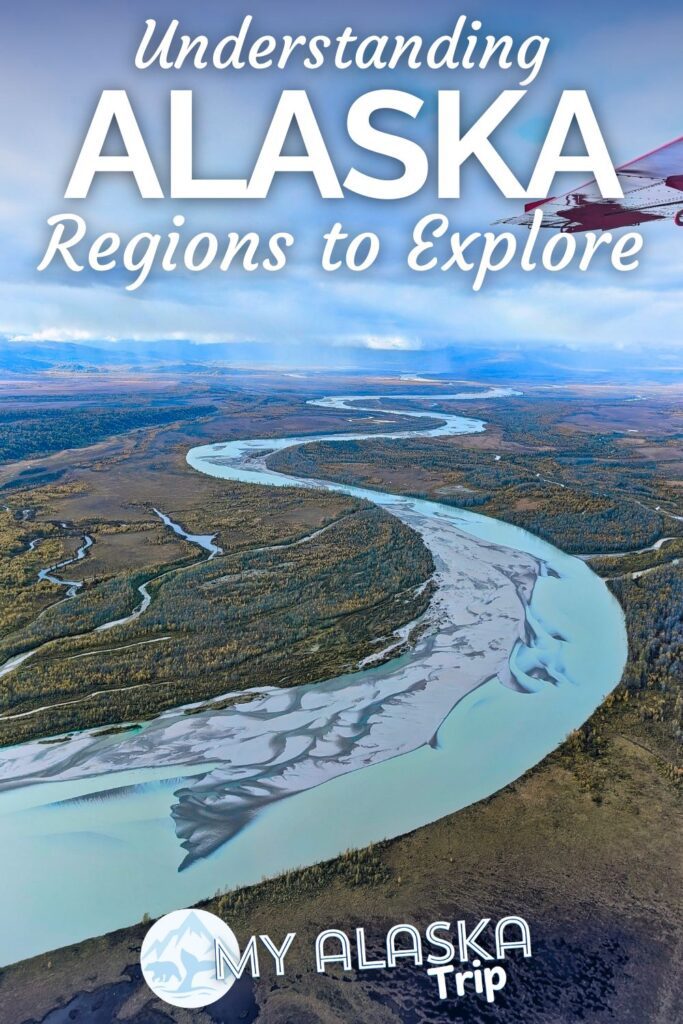
Alaska is more than the Inside Passage or Anchorage. Here you’ll find everything you need to know when it comes to understanding the regions of Alaska and how to get from here to there. A lot of visitors arrive with a basic knowledge of Southcentral Alaska, but if you’re looking to spend a bit more time or want to see Alaska’s wilderness unfiltered, we can help you plan that sort of Alaska trip The regions you can visit range from collections of islands to landlocked expanses of tundra, so let’s go see it all!
We all know that Alaska is a huge state, but it’s also a very strangely shaped one. There’s the mainland of AK and then Southeast Alaska and the capital, Juneau, are dangling off to the lower east side. And then you have the Aleutian Islands, a humongous archipelago, stretching off into the Pacific Ocean. Alaska is 586,400 square miles which equals 1/5 of the lower 48 states. It’s the size of Texas, Montana California and more combined. Huge!
With so much ground to cover, it can be difficult to plan travel to the different Alaska regions in the same trip. We’ve got tips to help you do it though, including suggestions for combining different types of travel to make an incredible Alaska trip. Before that though, an important statement regarding the lands of Alaska and both the past and current Alaska Native peoples:
I think it’s very important to understand the background of any area we travel to. Sometimes that history is beautiful, sometimes it’s ugly or messy, and sometimes it’s both. Alaska was taken from several large groups of people, many of whom were forced to attend Indian Schools to be re-educated. Alaska has a history of segregation between white people and the different tribes who’ve called this land home for tens of thousands of years. This is why it’s important to acknowledge the people and make an effort to learn and travel responsibly.
We acknowledge that the lands we visit or on which we live here are the traditional lands of the Athabascan, Dena’ina, Tanana, Alutiq, Aleut, Yupik, Inupiaq, Eyak, Tlingit, Haida, Tsimshian and other Peoples that have stewarded this land throughout the generations. We acknowledge the history and current lives of these people and aim to interact with and visit their ancestral lands respectfully and with gratitude.
Southcentral Alaska – Anchorage and the Kenai Peninsula
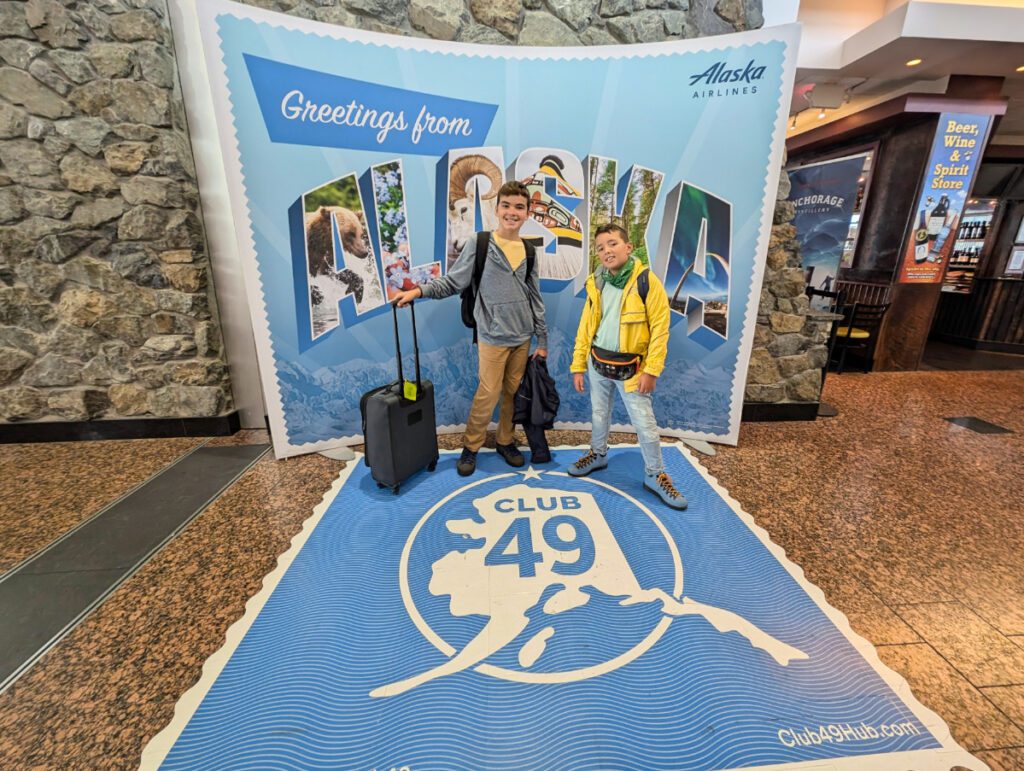
The hub of most travel in Alaska, Anchorage is a major city with an international airport. You can fly into Anchorage from mainland USA, Hawaii, Vancouver BC (Canada) and Frankfurt, Germany. Having said that, if you’re traveling to Alaska internationally, you can get to ANC from a major international city with usually just one stop, either in Seattle (SEA) or Vancouver (YVR). Once in Anchorage, the state is your oyster!
FLY INTO: Anchorage ANC, optional seaplane to Homer
Anchorage Area
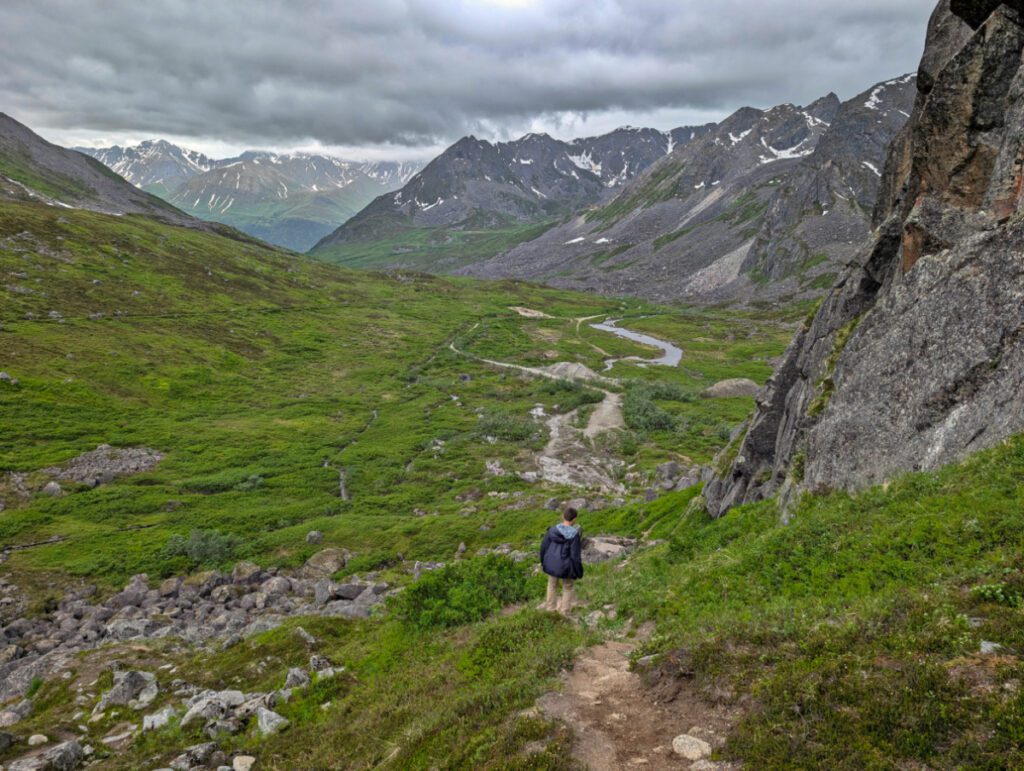
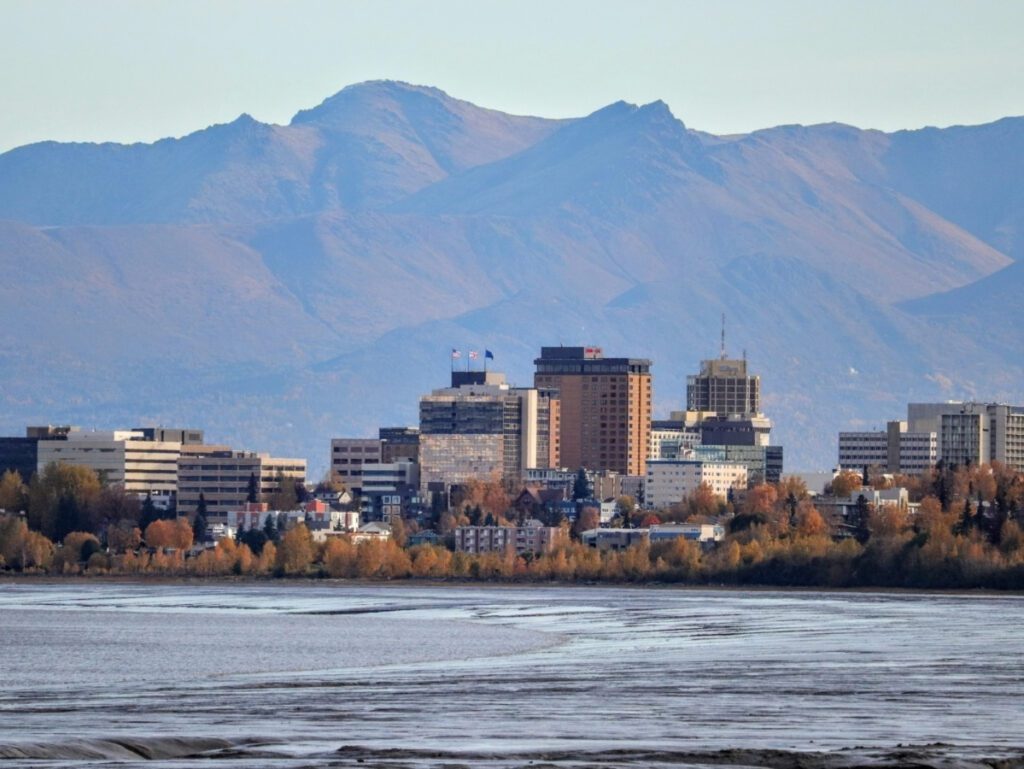
Anchorage itself is a fun city with an incredible museum (the Anchorage Museum), an awesome coastal bike trail, good restaurants, lots of hotels and it’s a great home base for exploring Southcentral Alaska. From here you can easily take day trips up to the MatSu Valley, including the towns of Wasilla and Palmer, and get into some of the most accessible and beautiful stretches of mainland Alaska. Outdoor adventures in Chugach State Park and even the parks around Anchorage are fun for all kinds of activities and wildlife watching.
Anchorage is also the ceremonial start of the Iditarod race in March each year. The part of the Iditarod that you can watch in Anchorage is not the official beginning, as that actually starts 40 miles away in Eagle River, but it’s the exciting pageantry of the famous dogsled race. There are events and parties and excitement, and it’s a perfectly Alaska experience.
Turnagain Arm: Girdwood and Portage
Heading south from Anchorage, you’ll drive along the Turnagain Arm (a fjord coming off the Cook Inlet) on the Seward Highway. This will take you through Girdwood, where Anchorage comes to downhill ski in the winter, and then to Portage. Portage Valley is a wonderful place for hiking, as well as visiting the Portage Glacier and accessing the tunnel to Whittier. There’s even a boat tour on Portage Lake that takes you around the mountain to the face of the glacier, and hopefully you can see it calve a bit.
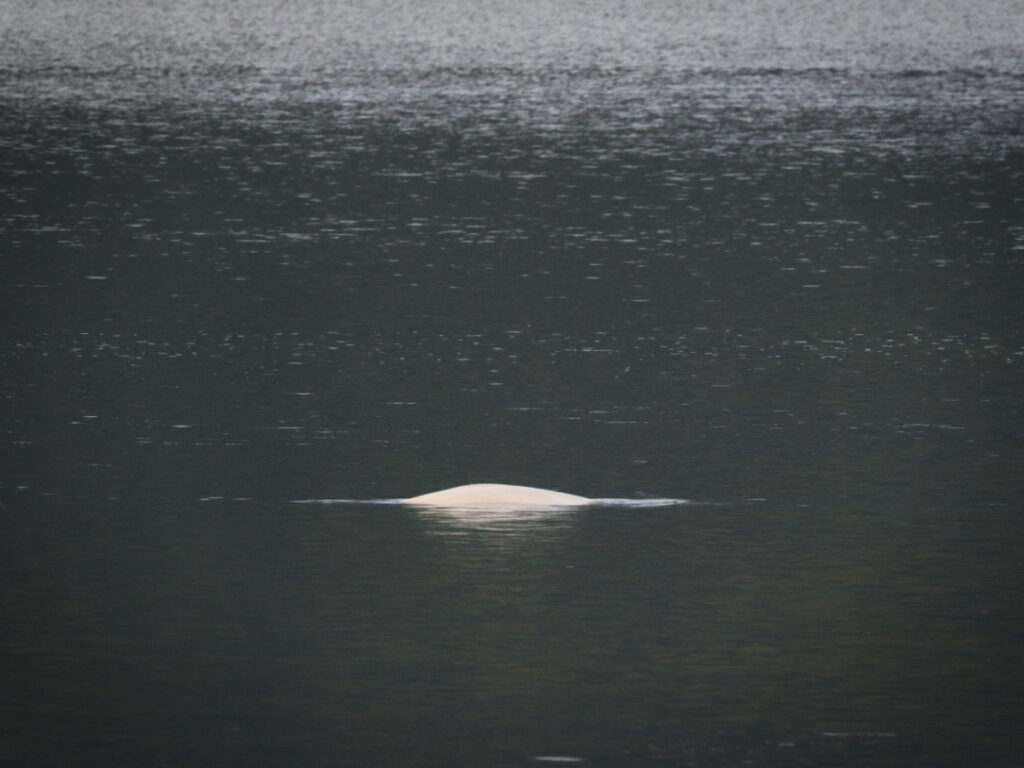
The two other big highlights of driving the Seward Highway along Turnagain Arm are the Alaska Wildlife Conservation Center and watching for beluga whales. That’s right! You can actually see beluga whales from land here along the Turnagain Arm. Whether you stop of Beluga Point or another wayside area, it’s worth hanging out and watching the water for a bit, especially during an incoming tide during the salmon run.
THE BORE TIDE! I almost forgot to tell you about the famous bore tide of Turnagain Arm. Due to the geology and flow of water from rivers into the Arm, when the tide turns from low to high tide, a special bore tide forms. This is when the incoming tide creates a singular wave that “bores” its way through the inlet to the end. Surfers love to ride the bore and can often be seen surfing the bore tide from around Girdwood to as far in as it’ll take them.
Seward and Kenai Fjords National Park
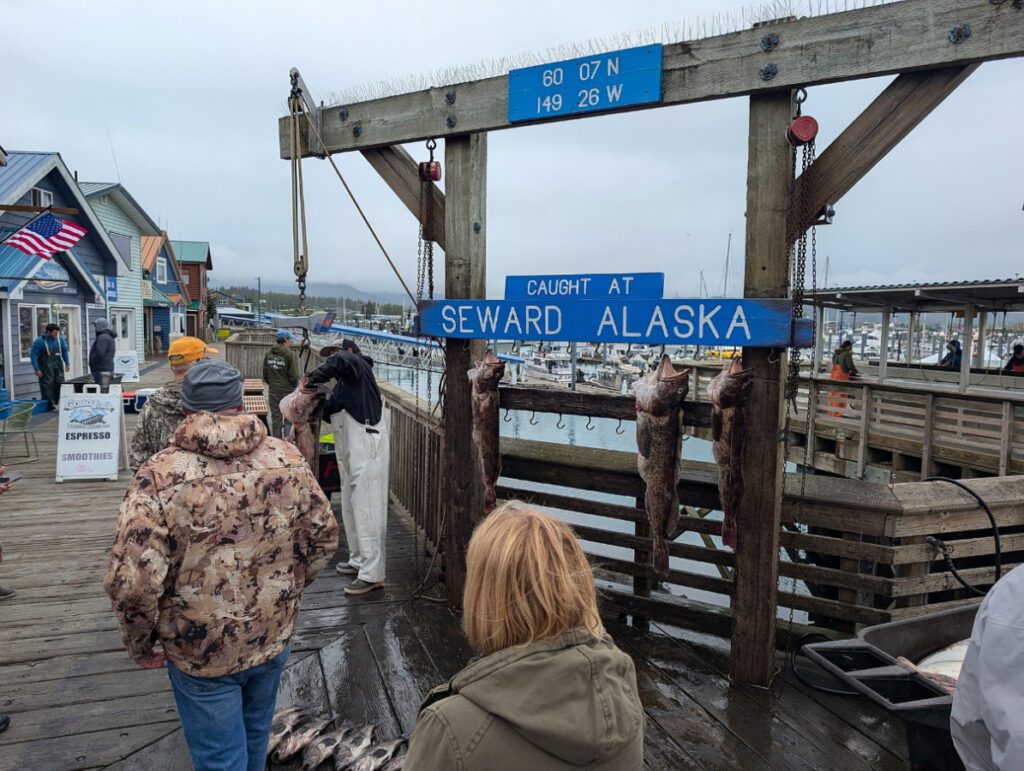
Since I used to live on the Kenai Peninsula, I always love to talk about it, and especially Kenai Fjords National Park. Seward is a cute fishing town on the Kenai, about two hours from Anchorage. It’s the gateway to the Kenai Fjords and where you’ll catch your boat tour into Kenai Fjords National Park. Between the amazing whale watching and seeing tidewater glaciers making their splash into the sea, I think Kenai Fjords Tours and the whole park in general are a true Alaska gem.
In Seward you’ll also be able to do kayak tours with Sunny Cove Kayaking, hike at Exit Glacier in the National Park, and visit the Alaska SeaLife Center to watch puffins dive. A lot of people come to Seward on their Alaska trip to go deep sea fishing for halibut and cod as well, so there’s something for everyone here.
The Sterling Highway and Kenai River
I can’t even begin to count the number of times I’ve driven the Sterling Highway across the Kenai Peninsula. I used to live in Cooper Landing, so this region of Alaska is very special to me. What makes it so cool are the mountains surrounding you at all times paired with moose, bear and porcupines wherever you explore. What the Kenai River and mountains are known for though is the fishing.
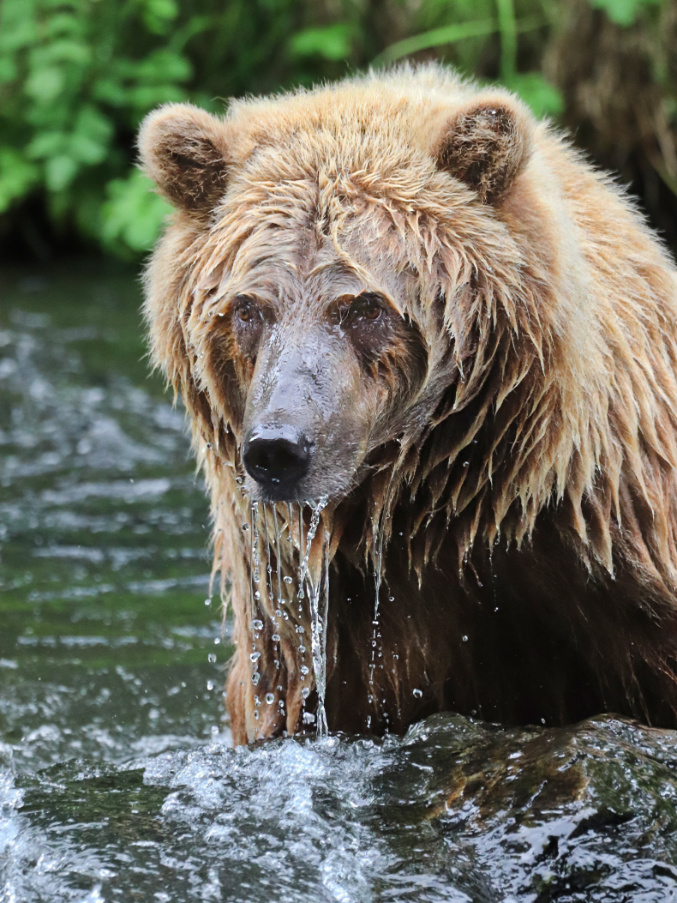
Yes, there are wonderful hikes all along the Sterling Highway, and Skilak Lake has awesome camping and kayaking, but the fishing is the hot ticket here. With all five types of Alaskan salmon running on the Kenai River (king, silver, red, pink and dog) it’s a wildly popular place for fishing in the peak summer months. It’s not just the humans fishing though, as there’s rarely a day you don’t spy an Alaskan brown bear also trying his or her luck in the rivers, especially on the Russian River.
Homer, Kenai and Cook Inlet
The further and further you get from Anchorage the more wild it gets. I remember the first time I went fishing on the Kasilof River I saw more eagles and moose than the number of fish I caught. The area from the town of Kenai down to the Homer Spit is full of cabins and fishing guide services. There are lots of remote, beautiful places to camp. This is a favorite destination for weekend trips if you live in the Anchorage area.
Homer itself is a fun town. It’s famous for the Spit with it’s fishermen bars and deep sea fishing guides, but there’s more to the town than that. Homer is an actual town with residents who live here year round and welcome the summer visitors, and because it has a solid population through every season, there are lots of restaurants, some galleries and cool shops that are open beyond the standard June through September season.
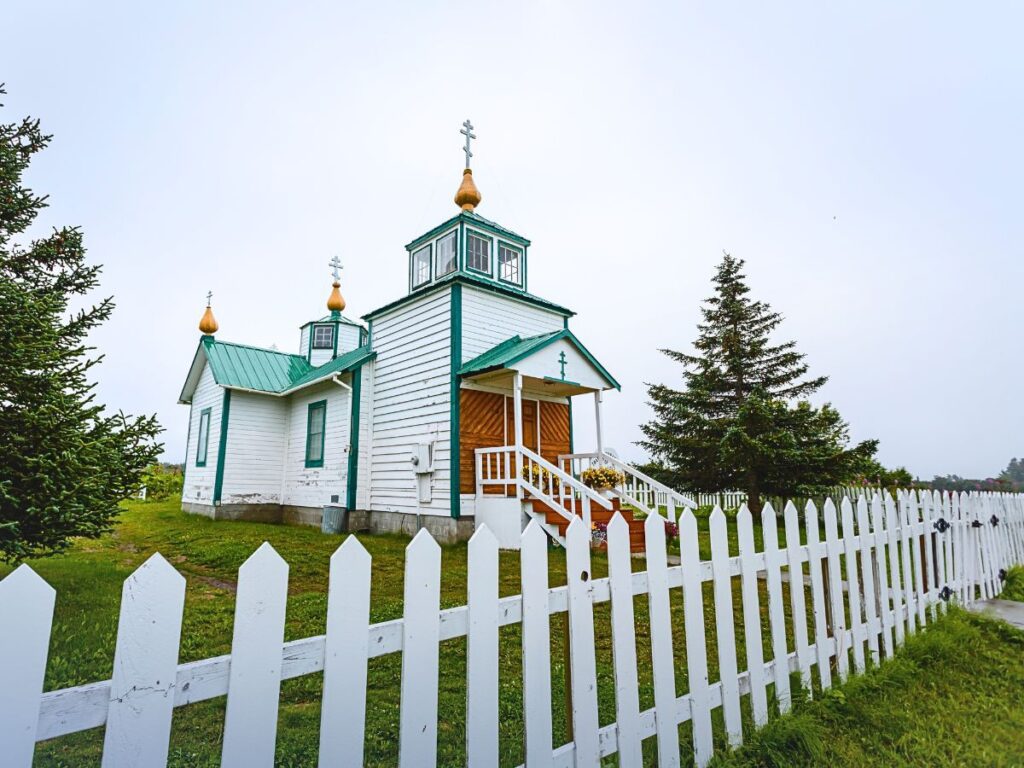
Another fascinating element to the western side of the Kenai Peninsula is the Russian immigrant element. From Nikiski to Homer and across the water in Seldovia, there are historic Russian Orthodox churches. You can visit them respectfully and appreciate them from the outside, or if you would like to participate in a service, the active churches have posted service times. I think this unique cultural element is very special, even if I myself am not a believer.
Southeast Alaska – Juneau, Sitka and the Inside Passage
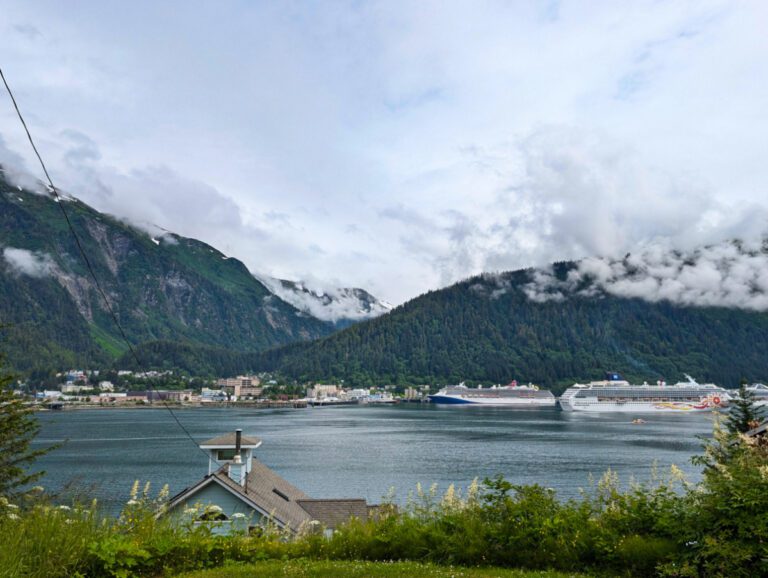
If you ask the average American who travels a fair amount if they’ve taken an Alaska trip, chances are they’ll say “Yes, we did a cruise a few years ago.” That is one way to see one of the Alaska regions, but there is much more to each of the islands in Southeast Alaska than the cruise port. I know that many people do venture BEYOND the port, but not everyone does. Beyond the surface, the port towns and outlying islands of this region are amazing, full of Alaska Native culture and there in a ton of wildlife to se
FLY INTO: Juneau JNU or Sitka SIT, or arrive via Alaska Marine Highway
Juneau, the Alaska State Capital
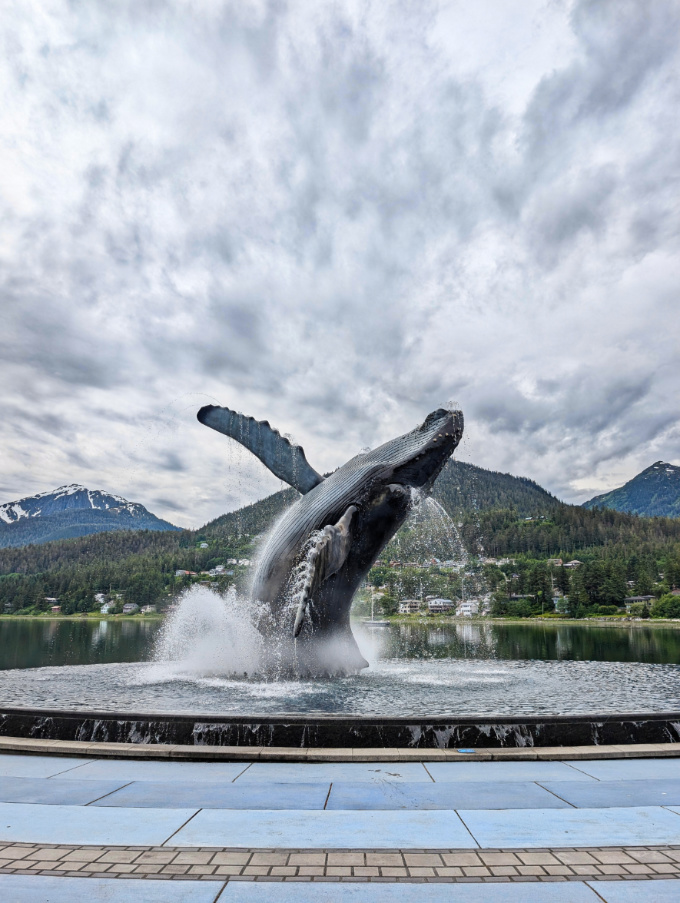
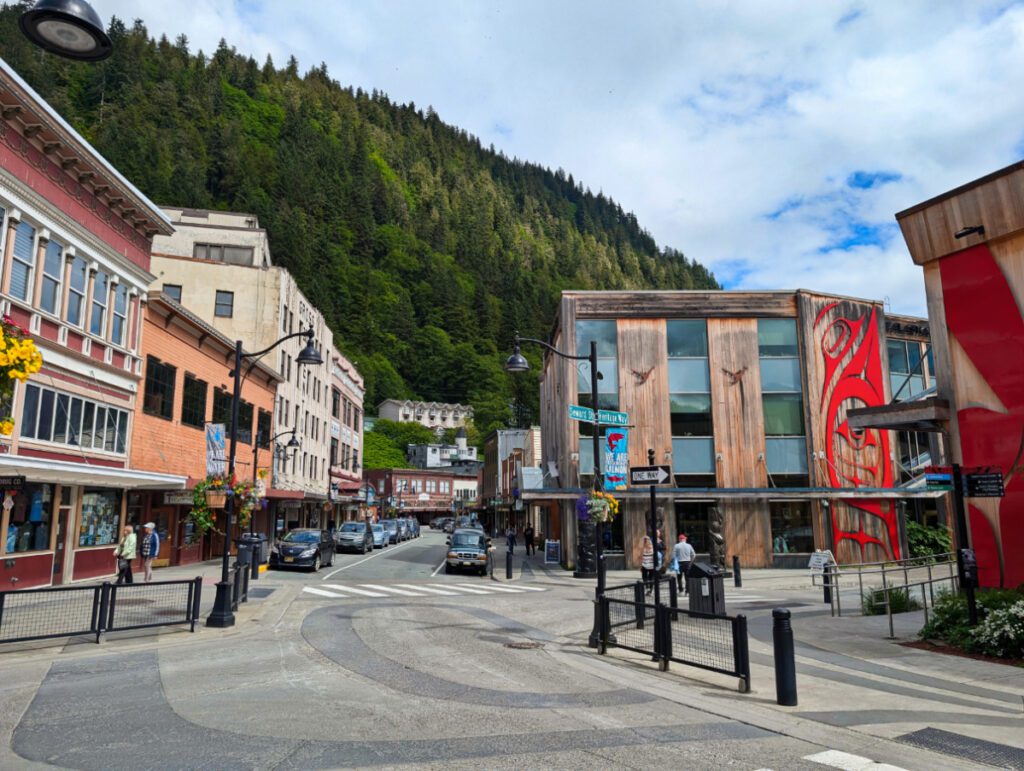
I really enjoy Juneau. As a tourist, it’s very walkable with lots of interesting things to do AND accessible nature. Juneau is beautiful, set against the mountains with staircases rising up through the neighborhoods. If you venture away from the port area and historic downtown, you’ll get to see even more beautiful areas. From the rocky beaches to the coves and whale watching of Auke Bay, waterfalls to the easy-to-visit Mendenhall Glacier, there you can easily plan a 3-5 day visit and have a great time.
If you’re already thinking you want Juneau to be a part of your Alaska trip, you can fly here and then take the Alaska Marine Highway on the day boat routes to Skagway, Haines and Gustavus, or the Alaska Fjordlines to Haines. This way you can explore the region without being on a cruise ship.
Sitka and Ketchikan
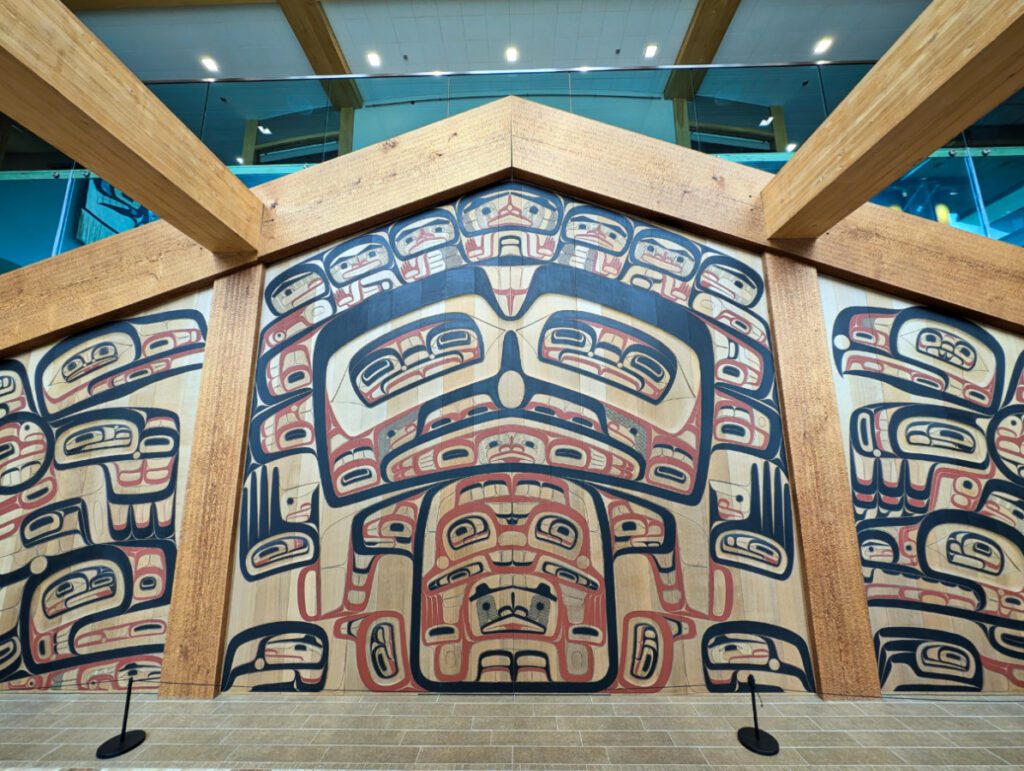
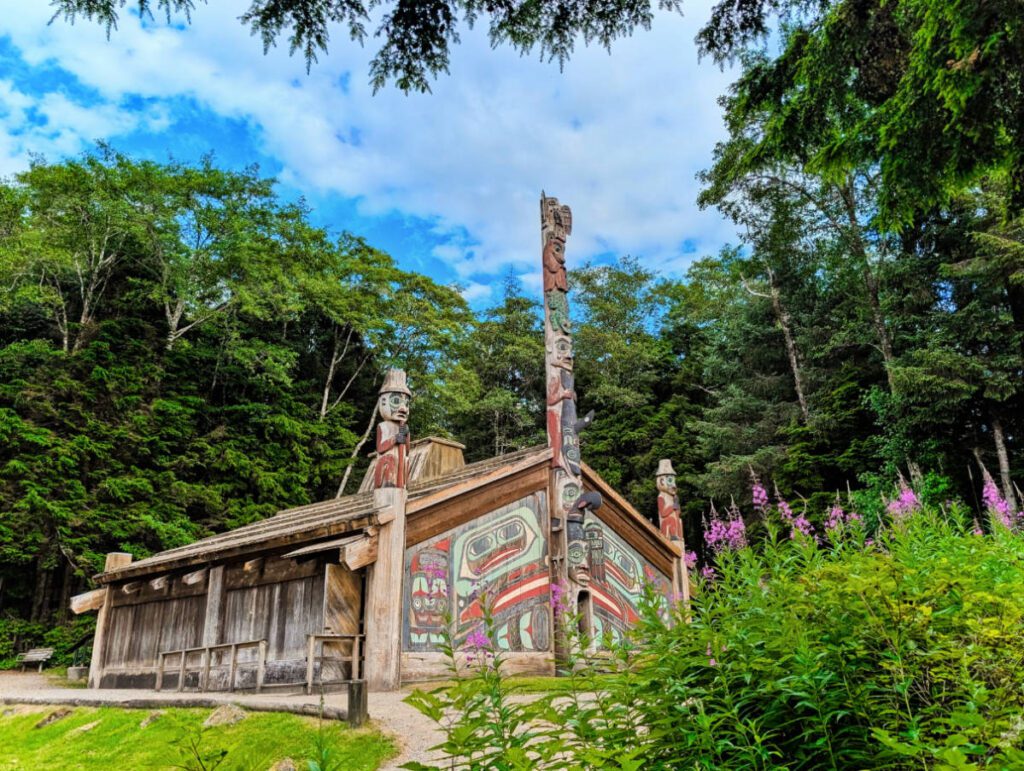
Southeast Alaska is one of the easiest Alaska regions to be able to experience Alaska Native culture. There are so many wonderful sites, museums, working artists and public exhibitions to include in your Alaska trip. When in Sitka, you’ve got some great options for learning and appreciating Tlingit art and artifacts. The Sheldon Jackson Museum is really interesting, and then Sitka National Historical Park is an awesome place to spend a day learning. With 18 totem poles and countless other Tlingit (said klink-it) exhibits, I think this is one of the best places to visit in Southeast Alaska to gain some insight into
Ketchikan also has quite a lot of Alaska Native culture in addition to the wildlife and beautiful Inside Passage scenery. Check out Totem Bight State Park, and the add to that the cool, perfectly picturesque historic area of Creek Street built on docks/stilts/piers and you’ve got a very unique town to visit. Both Sitka and Ketchikan are on the Alaska Marine Highway route, so if you’re not doing a cruise but want to access these spots, that’s a great option.
Skagway, Haines and Glacier Bay National Park
When I think of Skagway I think of bald eagles, but also the Alaska Gold Rush. And then nearby are Haines and Glacier Bay National Park, which are both wonderful. We have had great times in Haines, kayaking at Chilkoot Lake and hiking in Chilkat State Park. Really, this part of the Southeast Alaska region has so much to do and see. It is a bit complicated to explore though, so you’ll need to do a good job planning utilizing the Alaska Marine Highway. You can also visit these areas on a cruise through the Inside Passage.
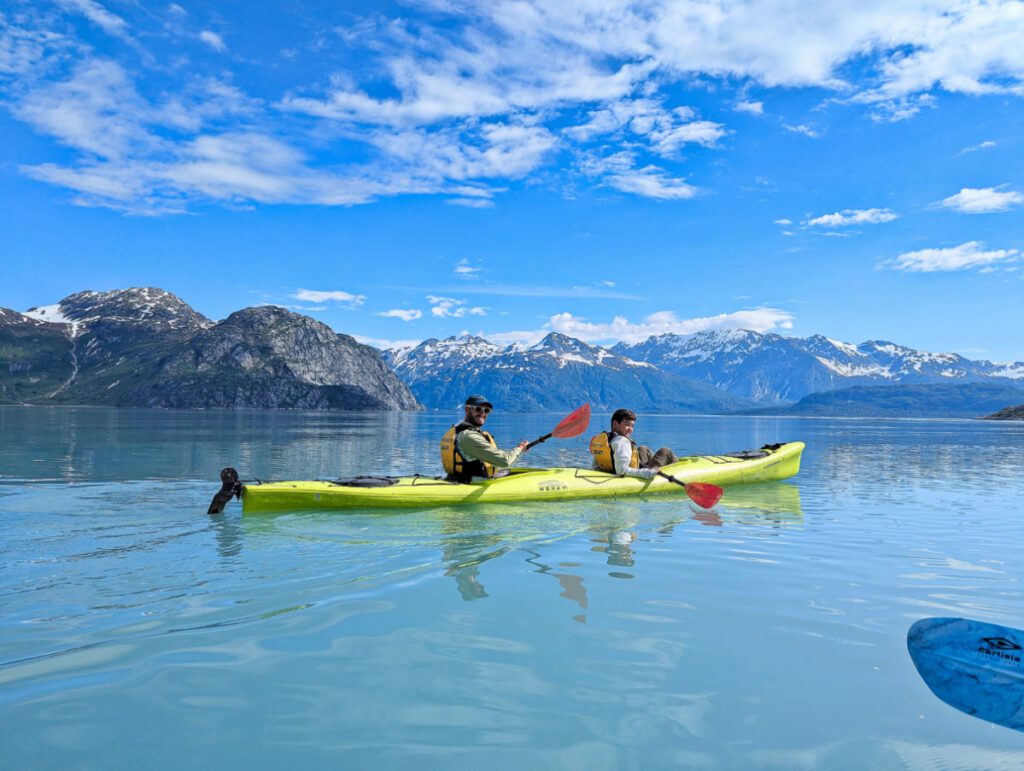
Visiting Glacier Bay National Park might seem pretty tricky to visit if you’re not on a cruise ship, but it’s not. You’ll need to fly into Gustavus from Juneau and then access the park through a boat tour. Since it’s a short flight and the National Park can be explored over the course of two or three days, it’s very doable to add to other Inside Passage stops. Our first visit to Glacier Bay National Park was actually on an UnCruise on the Wilderness Legacy ship, which in itself was awesome.
Copper River Valley
Everyone’s heard of Copper River Salmon, but do you know where the Copper River is? Have you heard of the Copper Valley? Well, this part of Alaska is really fun and beautiful, and it’s THE place to go for fishing and finding peace and quiet. Stretching from Valdez on Prince William Sound up to Glennallen in the Interior, the Richardson Highway is the main roadway through the Copper Valley. There are a few towns here that you MUST visit, and it’s not just fishing that you’ll be doing here, as you’ve also go Wrangell-St Elias National Park.
Valdez on Prince William Sound
Having been all over Alaska I can confidently say that Valdez is one of the prettiest places in the state. As you arrive into Port Valdez on the Alaska Marine Highway you’re surrounded by mountains on all sides. Yes, that’s the case for most places in Alaska it seems, but here in Valdez you cannot escape the mountainous view, waterfalls all around, and the amphitheater the land creates. It’s breathtaking.
While you’re in Valdez, you’ll get the chance to explore Old Town, which is one of the most unique historic sites in Alaska. This is where the town of Valdez used to be. When the Good Friday Earthquake of 1964 hit, the town of Valdez lost its waterfront as it slid into the water, followed by building crumbling and then a tsunami roaring into town. After this, what was left was moved to safer, more stable and higher ground, and now today there are markers where the buildings and streets once were. The museum has quite the exhibit about it.
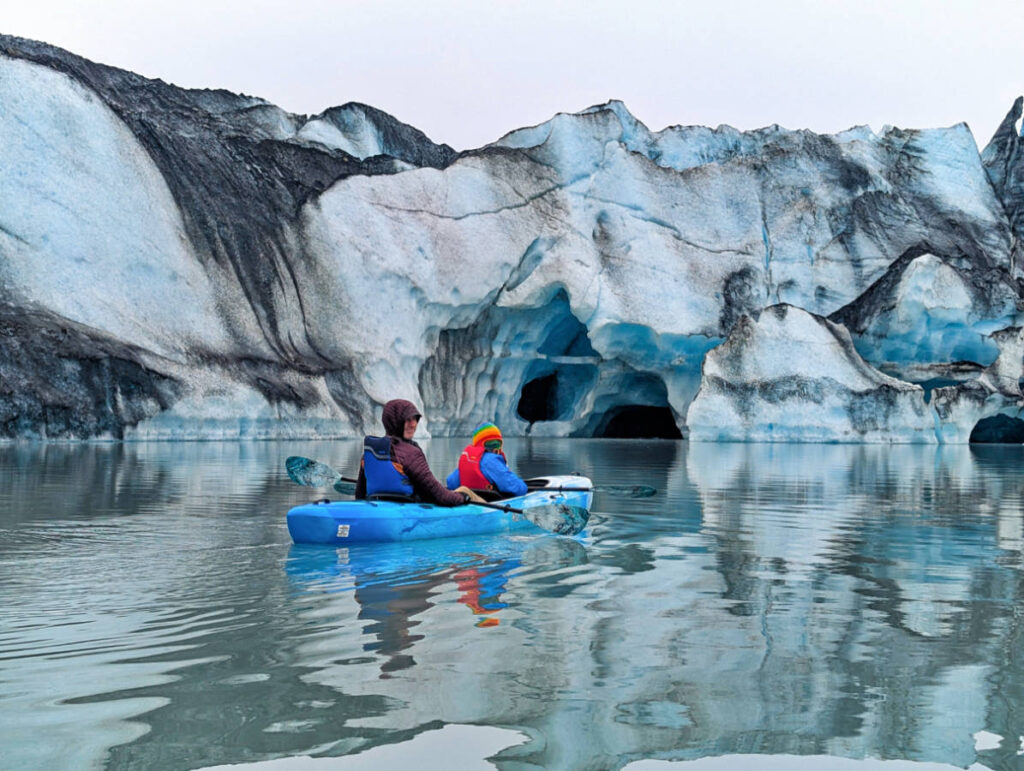
The other things that make Valdez a beautiful and interesting place to visit are the glaciers. The Valdez Glacier is a really special place to visit as it calves off into the lake. You can kayak among the icebergs and see the caves forming in the face of the glacier. For a fun experience with tidewater glaciers, Stephens Cruises does full day trips out to the Columbia Glacier and Meares Glacier, watching the ice calving and looking for wildlife. It’s beautiful and a great addition to your visit.
The Richardson Highway
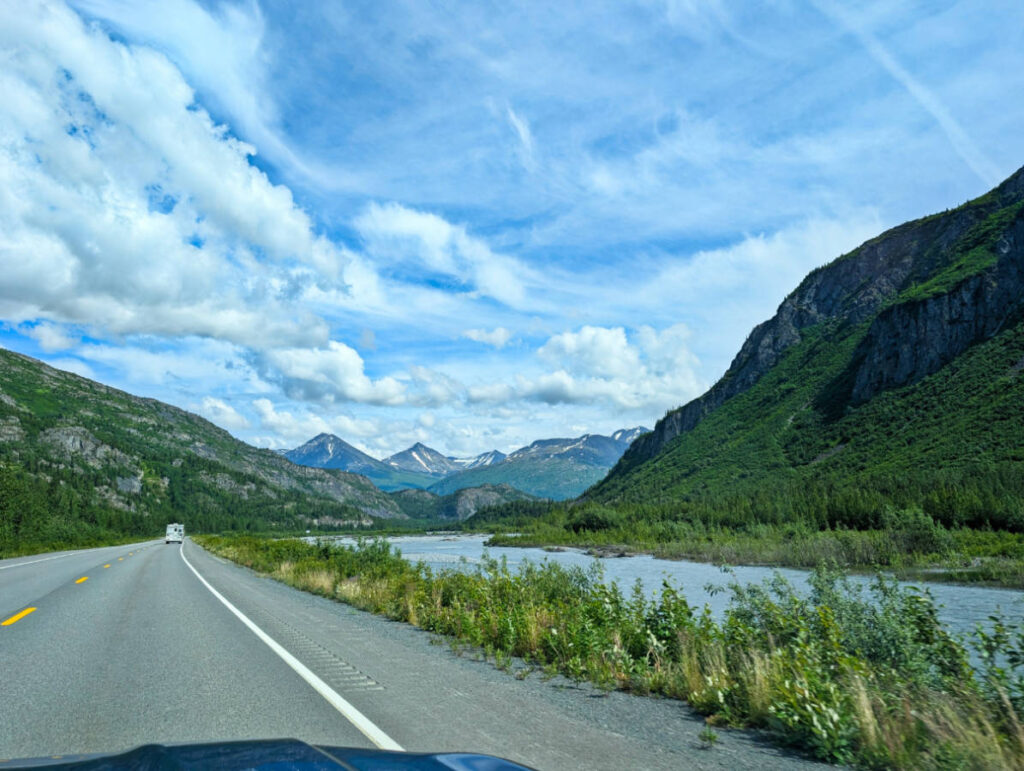
Starting in Valdez and ending in Fairbanks, the Richardson Highway is the second longest highway in Alaska, second only to the Dalton Highway which connects Fairbanks to Prudhoe Bay. As it heads north from Valdez, Keystone Canyon is the first beautiful stretch, full of waterfalls and the old railroad route. Heading up the mountains, Thompson Pass is next with beautiful hikes, epic views and glaciers you can walk to. As you keep driving along the Richardson Highway, you’ll pass through several tiny town and villages, and eventually you’ll come to Copper Center.
You’ll have noticed along your drive that there are TONS of rivers that you cross as they pour into the Copper River. These tributaries are final destinations for millions of salmon each year, so as you drive, keep your eyes peeled for bears and other wildlife that benefit from the incredible number of fish bringing nitrogen and other nutrients back up into the mountains. And these fish are what the Copper River Valley is famous to most people, so take time to appreciate them (observing them in their journey or enjoying them for a meal). Continuing north you’ll meet the Glenn Highway in Glennallen, and then the Taylor Highway a little furth from here (heading to Tok and the Yukon). The Richardson is an artery for locals and visitors alike, connecting some of the more remote destinations of Alaska.
McCarthy and Kennicott
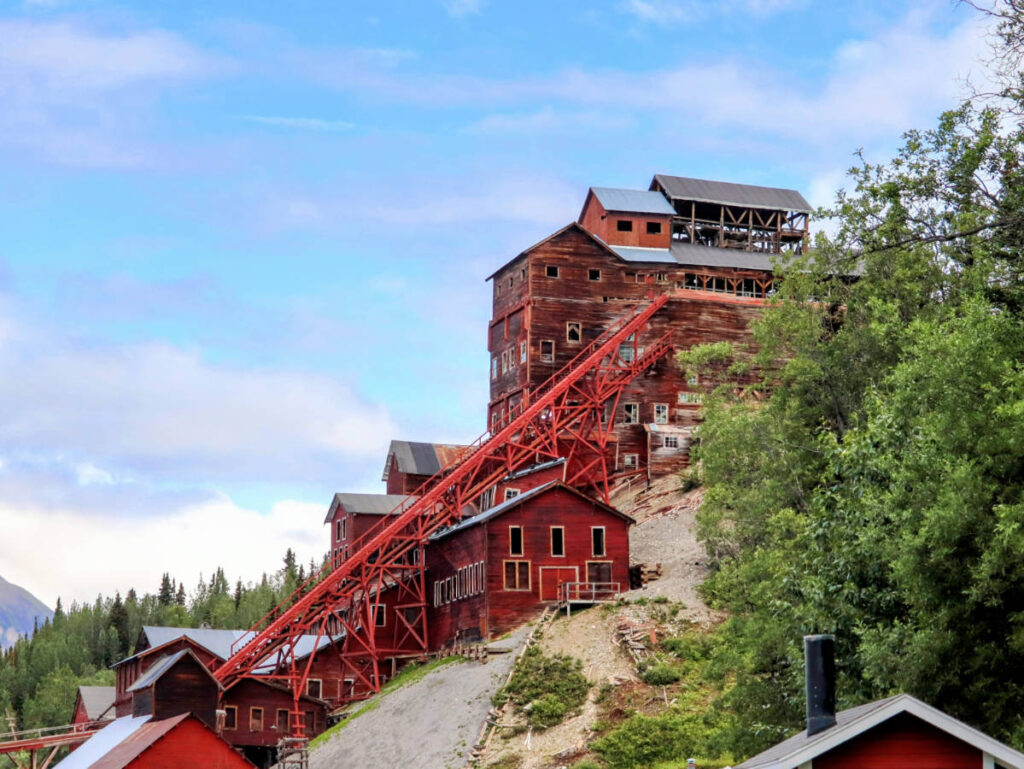
Have you head of the McCarthy Road? Or maybe the Kennecott Mines? When you get to the Tonsina River along the Richardson Highway, you’ll know you’re getting close to the turnoff for the Edgerton Highway. This beautiful road takes you to some of the most remote parts of Alaska that are connected to the main highways. Along the way you’ll have some beautiful viewpoints of the Wrangell Mountains and the rivers flowing from the glaciers. And you’ll have Liberty Falls State Recreation Site, which is one of the prettiest campgrounds in Alaska. You’re almost to the big turning point of the road at this point: Chitina. Chitna is where you’ll get gas and snacks before starting the 60 mile gravel journey to McCarthy.
Getting to visit McCarthy and Kennicott is pretty special, and even a lot of Alaskans don’t get to come here. The journey is pretty… pretty dusty, and then when you arrive, you surrender your car and rely on the shuttle vans, as regular people don’t get to drive across the Kennicott River. Enjoy the town of McCarthy and its wonderful dog population and use it as your jumping off point for exploring the nearby mill town of Kennicott. Kennicott is where you’ll find the Kennecott Mines National Historic Landmark, which is an Alaska icon. Visiting the mines paired with the Kennecott and Root Glaciers makes for a fun trip.
Copper Center and Glennallen
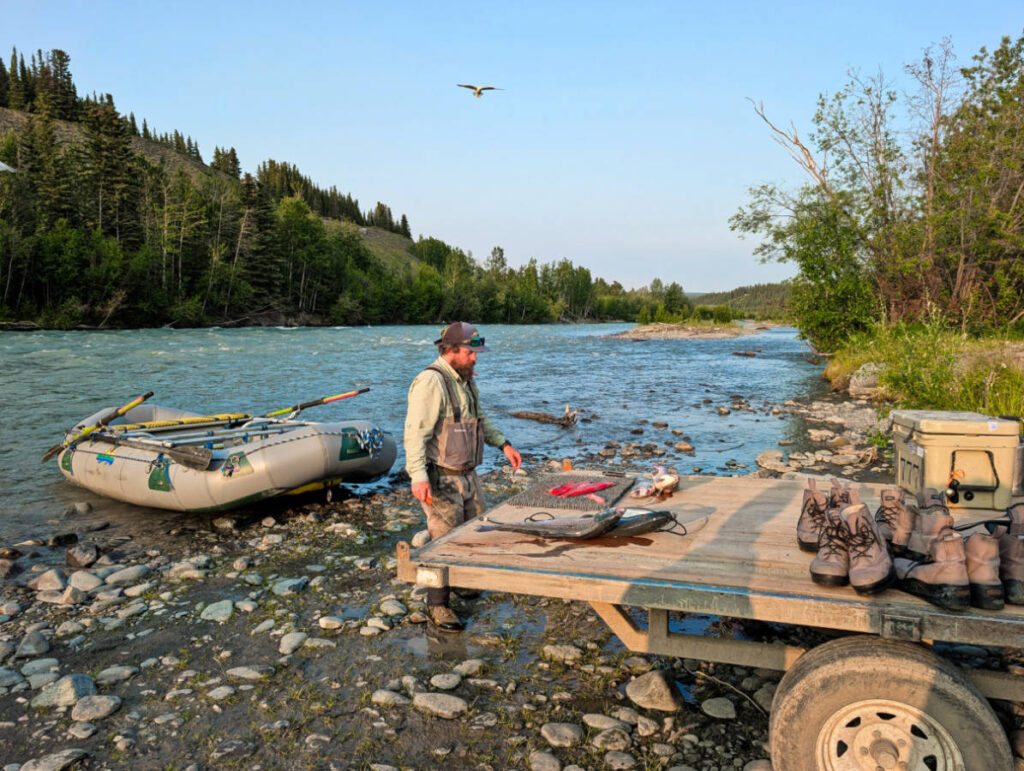
I’ll be honest, there’s not much in the way of tourism when you’re visiting Copper Center and Glennallen, but if you’re into fishing, you’ll have plenty to do. Some of the best Copper River salmon fishing happens here and it’s THE reason most people come to this part of the Copper River Valley. The Tonsina, Klutina, Gulkana and Copper Rivers are each unique and their salmon runs vary. There’s a bit of hiking you can do in the area as well, but for the most part this is simply fishing country. Copper River Guides is our recommended fishing guide service when it comes to salmon, and because they use rafts, you get a two-in-one of having a fun whitewater rafting trip in addition to your fishing!
When you get to Glennallen, there’s not much here as it’s mostly a crossroads. This is where you can get gas and stop into the visitor center to make plans for the surround areas as you continue either onto the Matanuska Valley, south to Valdez or if you’re heading north towards the Denali Highway.
Wrangell-St Elias National Park
The largest National Park in the USA, Wrangell-St Elias National Park and Preserve is a fascinating place. Much of it is inaccessible by car, and a lot of the recreation opportunities are in the backcountry, but there are a few places where you can access the park and enjoy some of its cool features and beautiful landscapes. When you visit McCarthy, the McCarthy Road actually weaves along the border of Wrangell-St Elias National Park and Preserve… “and Preserve” means what? The preserve part is a protection that covers land that is a part of the Park Service but is privately held or there are tribal rights to the land, or there is subsistence hunting and fishing allowed. That’s a very loose definitiong.
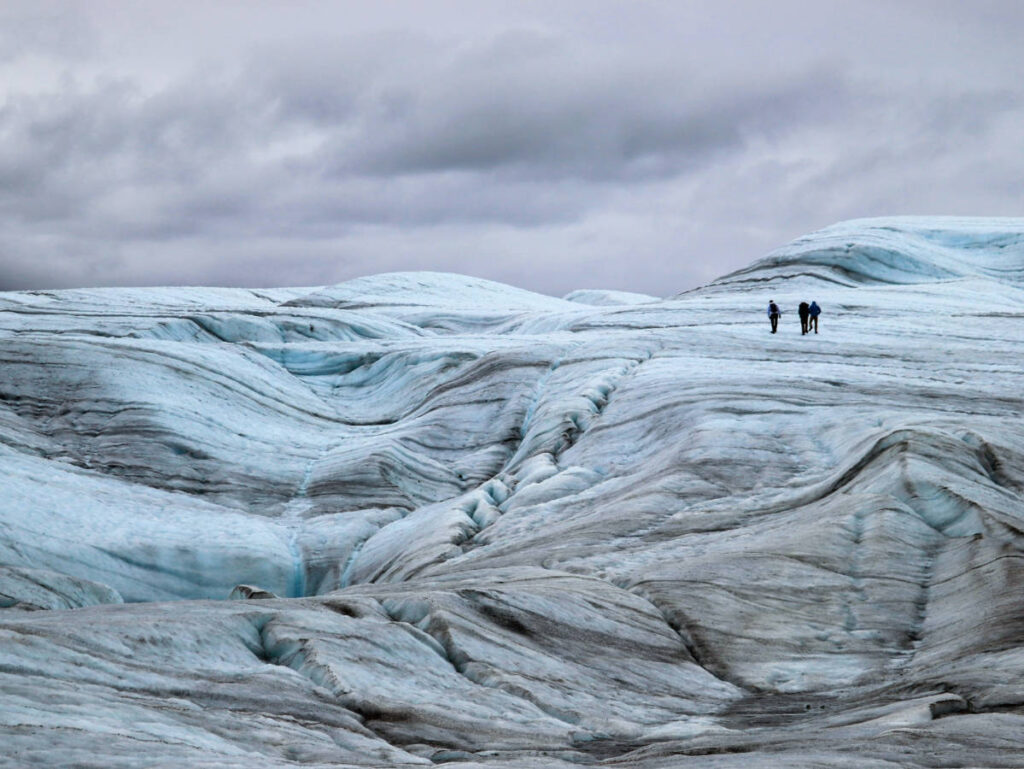
When you’re in the McCarthy/Kennicott area you’ll have access to the Root Glacier, Kennicott Glacier, Kennicott River and Kennecott Mines. There’s a lot to do in this small area of Wrangell-St Elias National Park and it’s fascinating on many levels. Also, this is a great area to visit if you have people with varying skill/energy levels because there are chill activities and really hardcore hiking. And it’s all beautiful.
In Copper Center you’ll be able to visit the main visitor center for Wrangell-St Elias National Park. Here you’ll find several building with exhibits, some nature trails, a theater building showing films about the area, and the Ahtna Cultural Center. The Ahtna peoples have called the area home for thousands of years and this space is all about how they live as stewards of the land and the traditions they continue to this day.
There are two other access points for Wrangell-St Elias National Park: Nabesna Road on the north side and the Yakutat area on the south. The Yakutat and coastal areas are only accessible by boat or float plane, but the Nabesna Road can be driven. This 42 mile gravel road has all kinds of hiking areas and access to the north side of the Wrangell Mountains and there’s practically nobody here.
Prince William Sound – connecting SC Alaska to the Inside Passage
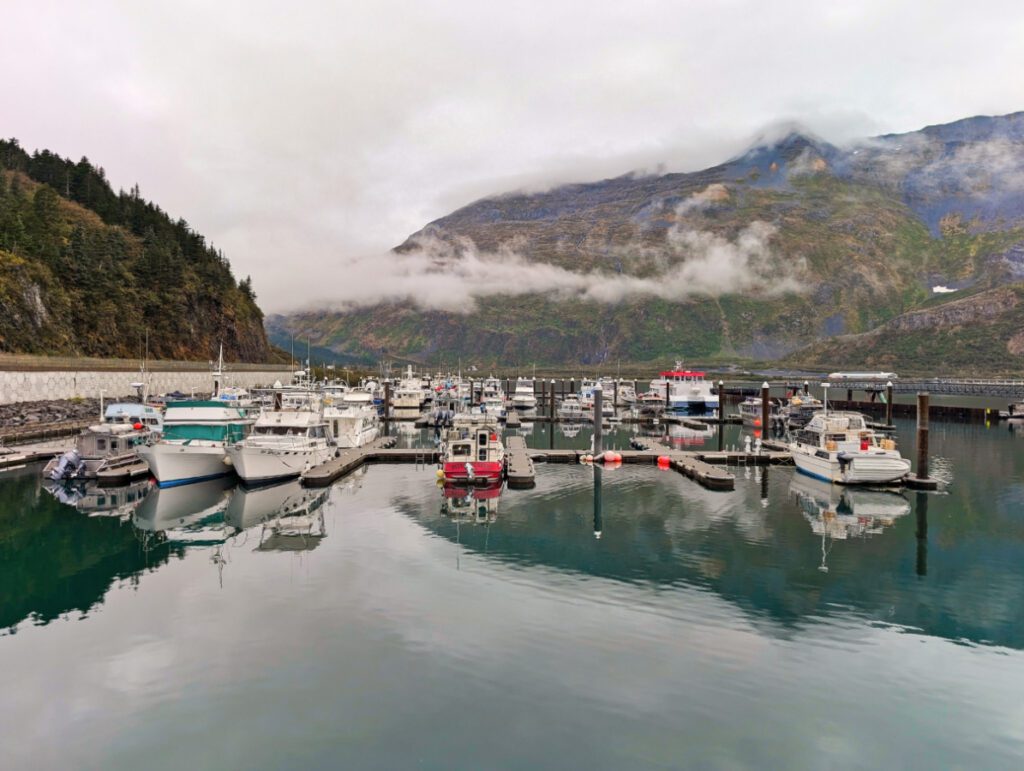
Starting between Anchorage and Seward, the town of Whittier is the launch point for exploring Prince William Sound. Cruise ships make port here as well as fishing boats and glacier tours. The famous College Fjord is a short boat ride away from Whittier via the Phillips 26 Glacier Cruise. Here you’ll find 20+ tidewater and hanging glaciers and incredible wildlife in the waters.
Beyond Whittier though are small communities and islands in Prince William Sound that people visit for camping and hunting. The wildlife all around the islands and in the fjords is beautiful, with whales being abundant all summer. Valdez and Cordova are the two biggest towns on the Sound, and each is beautiful. You can drive to Valdez (see above) but Cordova you must either fly into on a small plane or arrive by boat. This is the former port that the copper would be exported from, and now it’s more quiet with fishing and tourism being the main industries.
Really, the Alaska Marine Highway is the best way to see Prince William Sound, and when the connecting main line is running again (maybe 2027) the complete voyage will be awesome.
FLY INTO: Valdez VDZ via Anchorage ANC
Interior Alaska – the Alaska Range to the Arctic Circle
When I hear “Interior” I tend to picture rolling hills of tundra, bogs with mosquitoes, and endless white in the winter times… And that’s accurate. There’s a lot more to the Interior than that though. As you leave the Anchorage area, aka the Anchorage Bowl, you come into the Mantanuska-Susitna Borough. We affectionately call this the MatSu Valley and it’s kind of my favorite adventure destination in Alaska. If you keep heading north you’ll come to Denali National Park and Fairbanks. There’s more to the Interior, including much of the Unorganized / Unincorporated Borough.
FLY INTO: Anchorage ANC and then drive north OR Fairbanks FAI
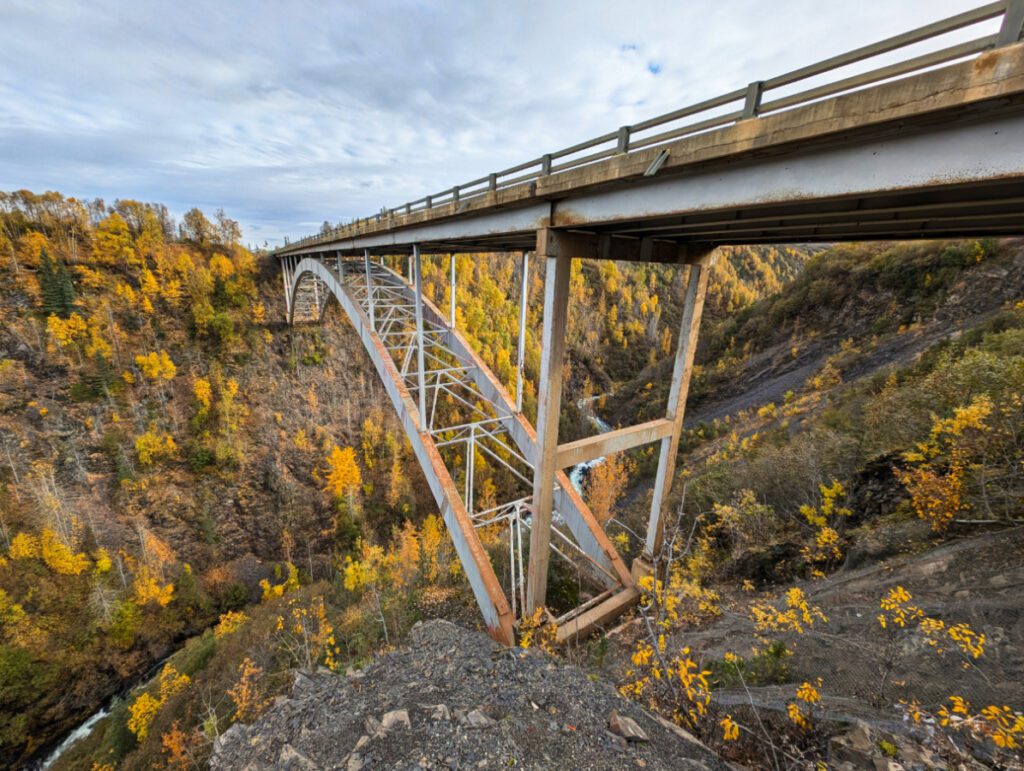
The Matsu Valley – Palmer to Talkeetna
I’ve never had a dull day in the MatSu Valley. My kids’ favorite hike in Alaska is here, my favorite scenery is here, one of my favorite Alaskan restaurants is here… It’s great. Palmer is rather the farming area of the state and this is where the Alaska State Fair is, but there’s more to Palmer than that. This is a great town to visit with kids as you’ve got the Musk Ox Farm, the Reindeer Farm, glaciers to explore, some mining history and it’s just pretty.
Between Palmer and Talkeetna is Hatcher Pass. There are so many wonderful hikes and views here. As you cross the Little Susitna River and head up into the mountains, the landscape opens up to give sweeping sights across the valley. Continuing across Hatcher Pass, it’s rugged and wild (closed in winter). This is the version of Alaska most visitors don’t get to see when they do an Alaska road trip.
On the Talkeetna side of the MatSu Valley you’ll find the more well-known sights and things to do. From fishing and rafting to hiking with views of Denali (formerly Mount McKinley), the outdoor activities are endless, and many are just off the Parks Highway. There are quite a few interesting sled dog farms here too. The town of Talkeetna is cute and kind of iconic, including their mayor… a cat. Grad some pizza and head to a jet boat tour on the Susitna River and you’ve had a great day in Talkeetna.
Denali National Park
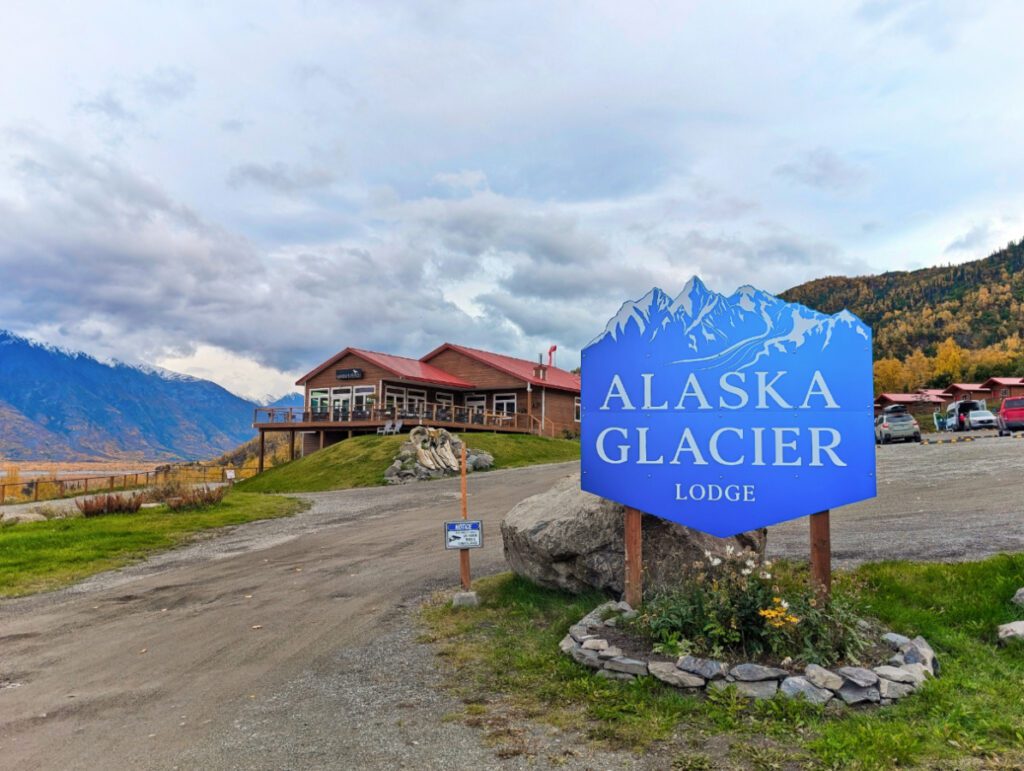
Don’t worry, we have lots of information about visiting Denali National Park on your Alaska trip. It was the first National Park to be created for the purpose of wildlife conservation, and today that still shows. There’s no shortage of moose, bear, caribou, birds, foxes and more. Whether you’re doing one of the guided bus tours deep into the park or you’re just visiting as far as you’re allowed to drive in (typically to Savage River, mile 15), each visit is different and beautiful.
One of the coolest things and also one of the most unique aspects of traveling in Denali National Park is off-trail hiking. That’s right, this is one of the only National Parks where you’re encouraged to wander through the tundra or taiga forest without a path, and in fact, you’re not supposed to retrace your steps even. Off-trail hiking can seem strange and even a little scary, but it’s wonderful and is a very special experience.
Fairbanks and the Northern Lights
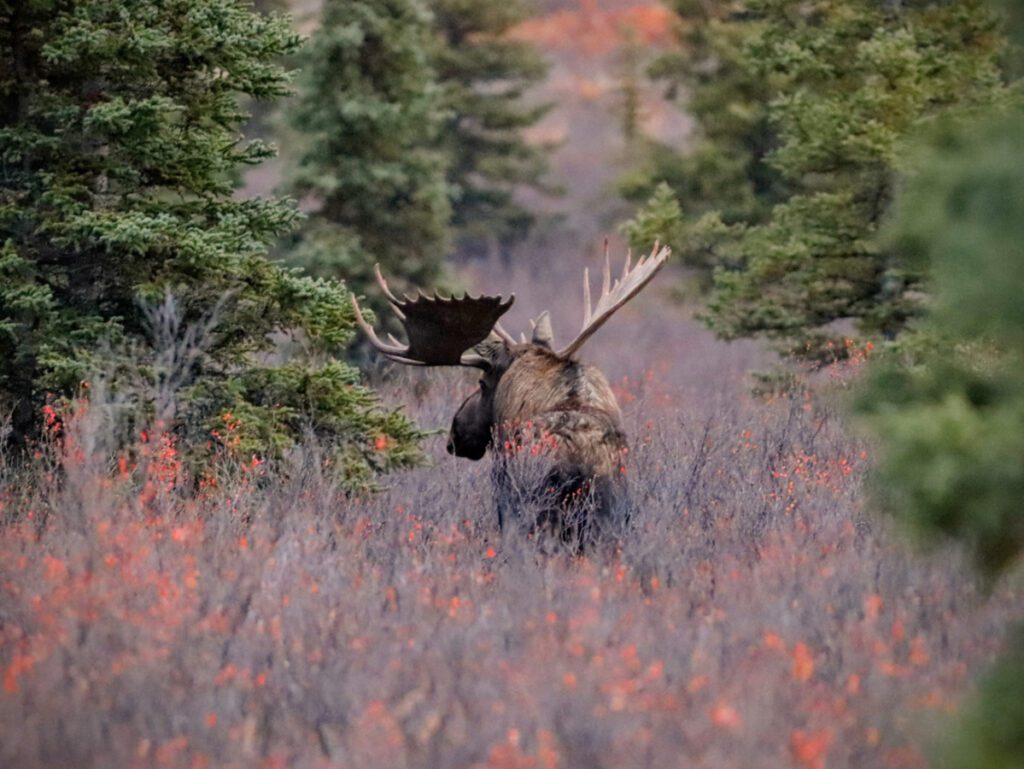
I know: you can see the Northern Lights from all around Alaska when the conditions are right, but Fairbanks and the areas within the ring of the Aurora Borealis really do get the most spectacular displays. If you get to visit in the winter months, get ready for some great photos of the Northern Lights in the Fairbanks area.
There’s more to this part of Alaska’s Interior than just the Lights (but they are amazing). Here you’ve got sled dog and mining culture, kayaking and fishing, and amazing wildlife. Fairbanks has some museums which are great on the extra cold days, and also Chena Hot Springs, which is fun if you need a soak.
Many people come to Fairbanks to either start or end an Alaska road trip. Because driving the Parks Highway to/from Anchorage is so popular, one-way car rentals are very easy in Fairbanks. I absolutely recommend it, and I say this as somebody who’s driven the Parks Highway more times than I can count.
Kobuk Valley and Gates of the Arctic National Parks
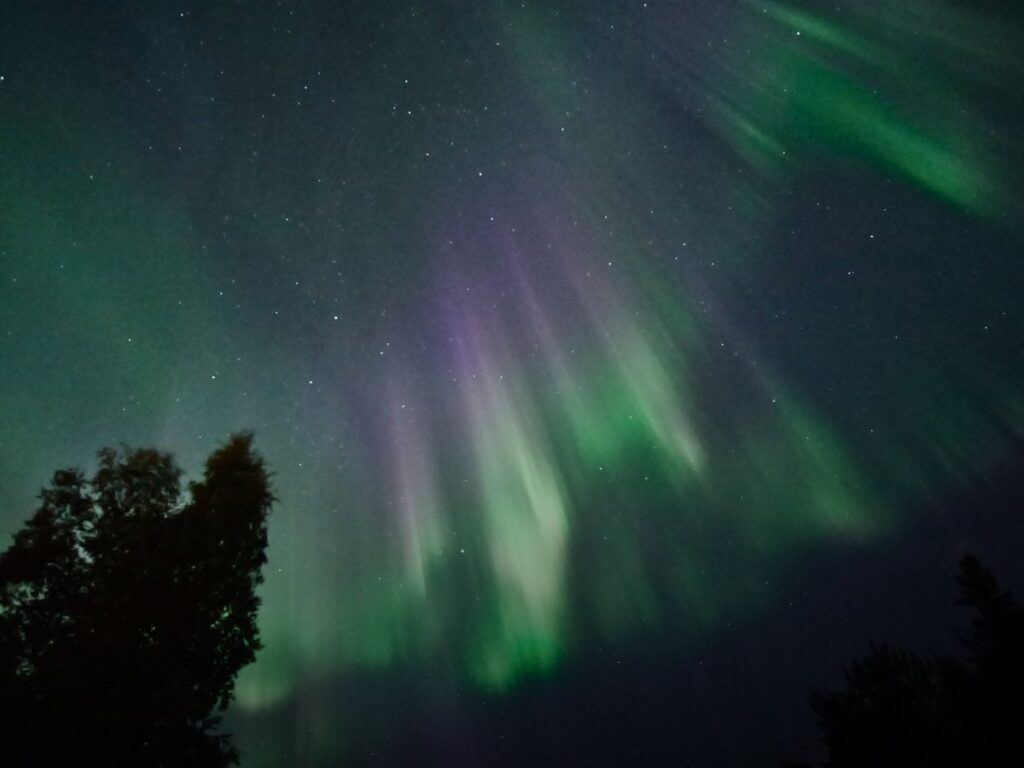
THESE are my Alaska bucket list: Kobuk Valley and Gates of the Arctic National Parks. Like with Katmai and Lake Clark National Parks, these two also can only be reached by small airplanes. From Fairbanks you can fly to Bettles and then explore Gates of the Arctic with a guide.
For Kobuk Valley National Park, it’s a little different. You again have to plan a private flight from Fairbanks or you can fly on Alaska Airlines in the summer season into Kotzebue (OTZ). From here you can get an authorized air taxi into the park and either explore with a guide, do your own hiking with a planned pickup, or you can bring an inflatable raft to float your way through the park and back to Kotzebue.
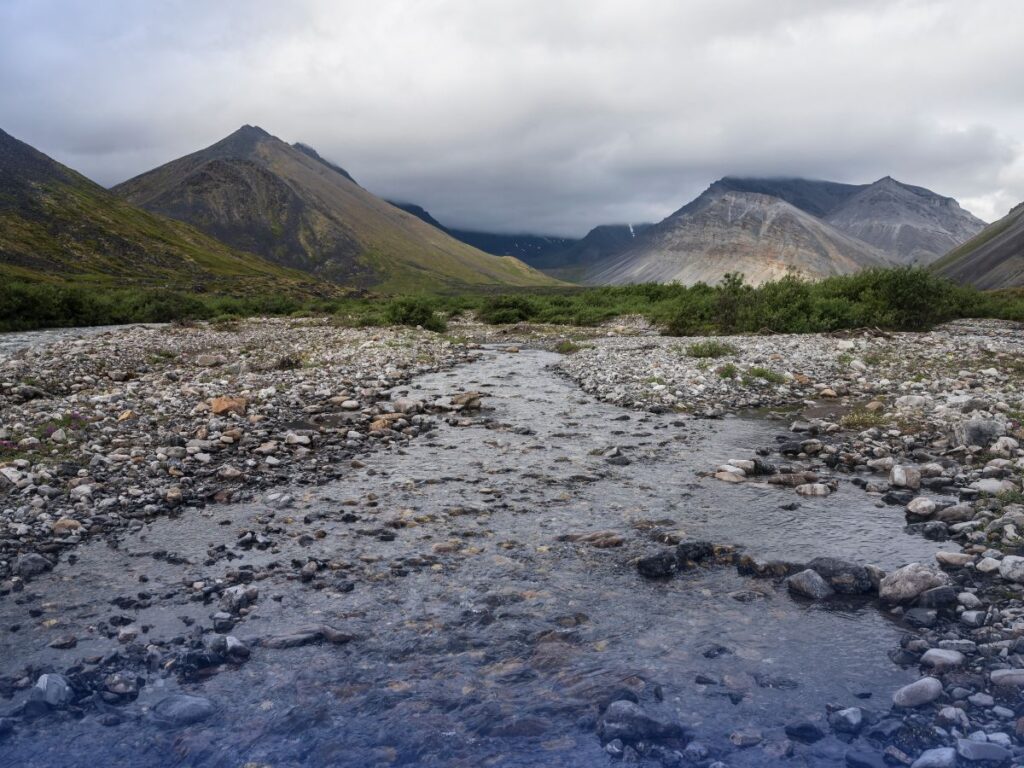
This region of Alaska, the Interior, is deep! It takes a lot of planning to get here and once here the costs can add up, but it’s uch a unique place to explore. Expect to see landscapes like nowhere else. In Kobuk you’ll see great dunes meeting tundra. In Gates of the Arctic you’ll have tundra prairies and winding rivers meeting the mountains. It’s all so far removed from civilization, I can only imagine the stories and photos.
Southwest Alaska – the Aleutian Islands and More
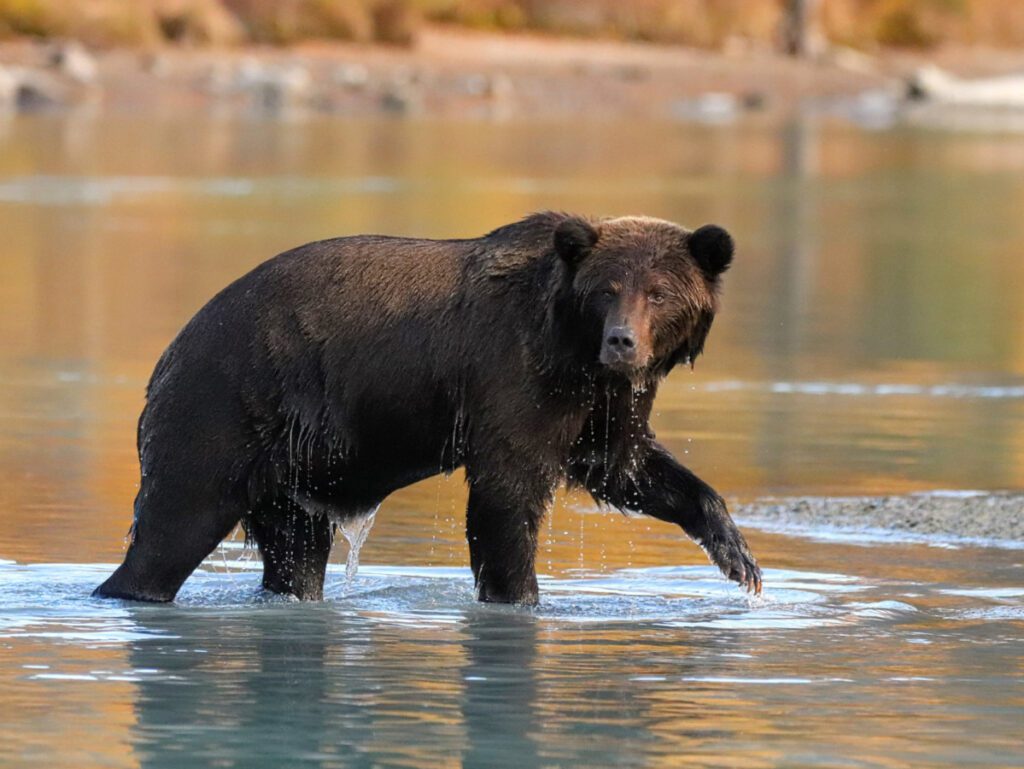
My experience in Southwest Alaska is limited to Katmai and Lake Clark National Parks. I’ll tell you, these Alaska National Parks are amazing and the wildlife is jaw dropping, but getting here is quite costly. Yes, you can fly from Anchorage to both of the Parks for a day trip or a few nights, but the high prices make an adventure like this very difficult for most travelers and families coming to Alaska. Bear viewing at Lake Clark National Park or Katmai really is a bucket list trip, including for Alaskans.
TIP: we partner with Rust’s Air Service and if you use the code 2traveldads when you book you’ll save 10% off your passage! Please let us know if you book so we can see how your trip went!
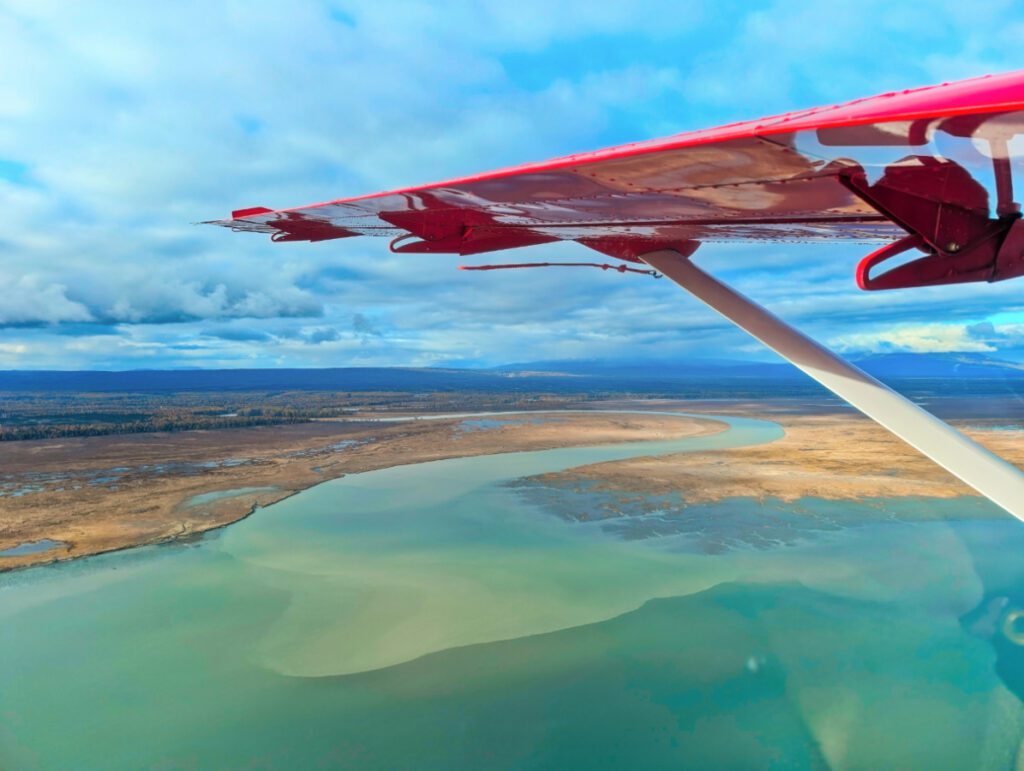
You can easily, and usually for very low Alaska Airlines miles, fly to the town of King Salmon or Kodiak, and here you’ll have incredible wildlife experiences too. Both towns have lodging options that won’t break the bank AND luxury lodge experiences as well. Southwest Alaska is not often something I get asked about, but I think there’s going to be more visitors here in the coming years’ tourism seasons.
The Aleutian Islands are the archipelago that stretch from the Alaska Peninsula (end of the Alaska Range of mountains) out into the Pacific Ocean. Alaska Native villages, military towns and fishing ports dot the Aleutian Islands. There isn’t a lot of tourism here, but you can visit and may just have the time of your life. Wildlife such as walruses, whales and migratory birds are a highlight if you’re a wildlife photographer like me.
Something else cool about the Aleutian Islands is the town of Adak. This is the westernmost town in the USA and only has about 200 people living there. You can actually fly here on Alaska Airlines if you’re interested in an adventure as remote as this.
Note: I haven’t been out to the Aleutian Islands yet, but as soon as I visit I’ll share all my observations and tips.
FLY INTO: Anchorage ANC and then fly to King Salmon AKN or Kodiak ADQ
Western Alaska – Nome, the Bering Sea and Iditarod Country
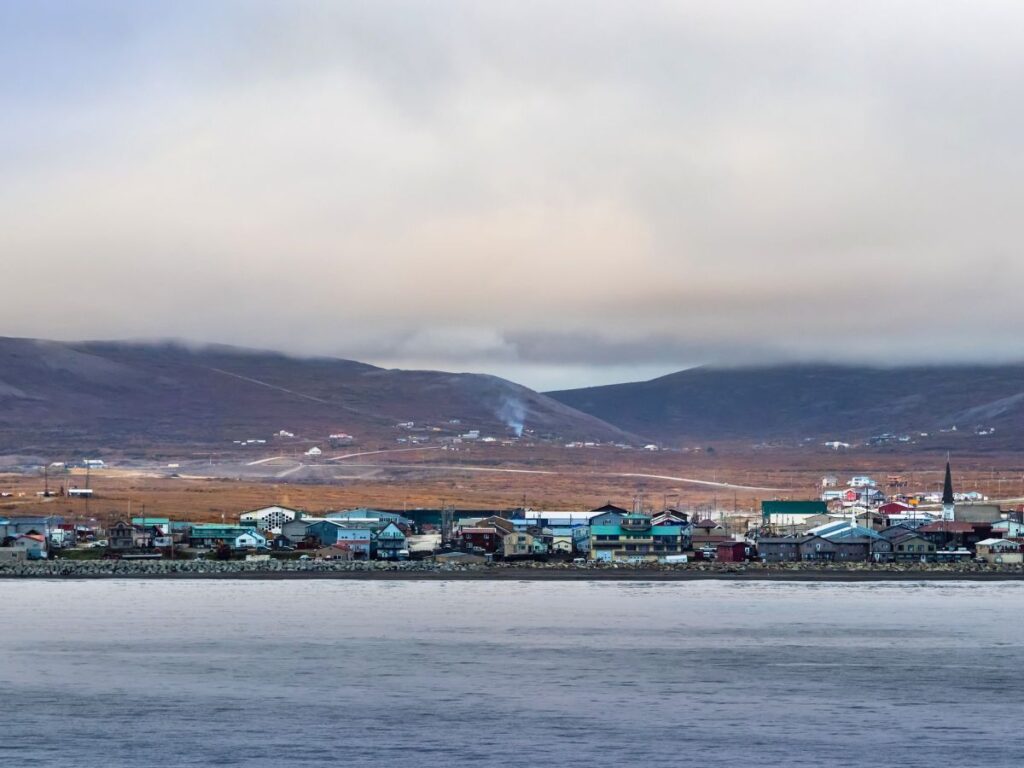
Of all the places I’ve been or wanted to go in Alaska, Nome and the Bering Sea are still at the top of my list. The world-famous Iditarod Race begins in Anchorage and ends here in Nome. The elusive musk ox (I’ve seen them at the Musk Ox Farm in Palmer) roams the lowlands and hills here. There are gold mines and fishing boats. It’s the end of North America. Epic!
So, is this a place a lot of people planning an Alaska trip want to visit? No, not really unless they’re feeling like some very unique travel that is NOT luxurious is what they’re looking for. You can definitely have fun and see some amazing views and wildlife in the far reaches of Alaska, but Nome and the surrounding lands aren’t built up for major tourism. You can for sure plan a trip, but you’ll need to work with a guide for a lot of the potential adventures.
Something cool about visiting Nome is that you get a very different sort of tourism vibe than Southcentral or Southeast Alaska. This region is very chill and rugged, with the toughest Alaskans calling it home. Native Alaskan culture is strong in the smaller communities and in Nome. Sled Dog culture is strong, both in summer with tours and during the Iditarod. And the wildlife viewing is one of a kind, with birds, bears whales and large land mammals. Nome and the Bering Sea are an epic alternative to the standard Alaska trip.
FLY INTO: Anchorage ANC and then connect to Nome OME
As you work on planning your Alaska trip, I would encourage you to add a few less visited Alaska regions to your plan. If you have the time and the budget, the adventure that awaits in Alaska really is boundless.
If you have any questions about planning your travel to or in Alaska, need some specific recommendations or want to share your favorite places and activities, please send us a note. We’re always happy to hear from other who love Alaska as much as we do.