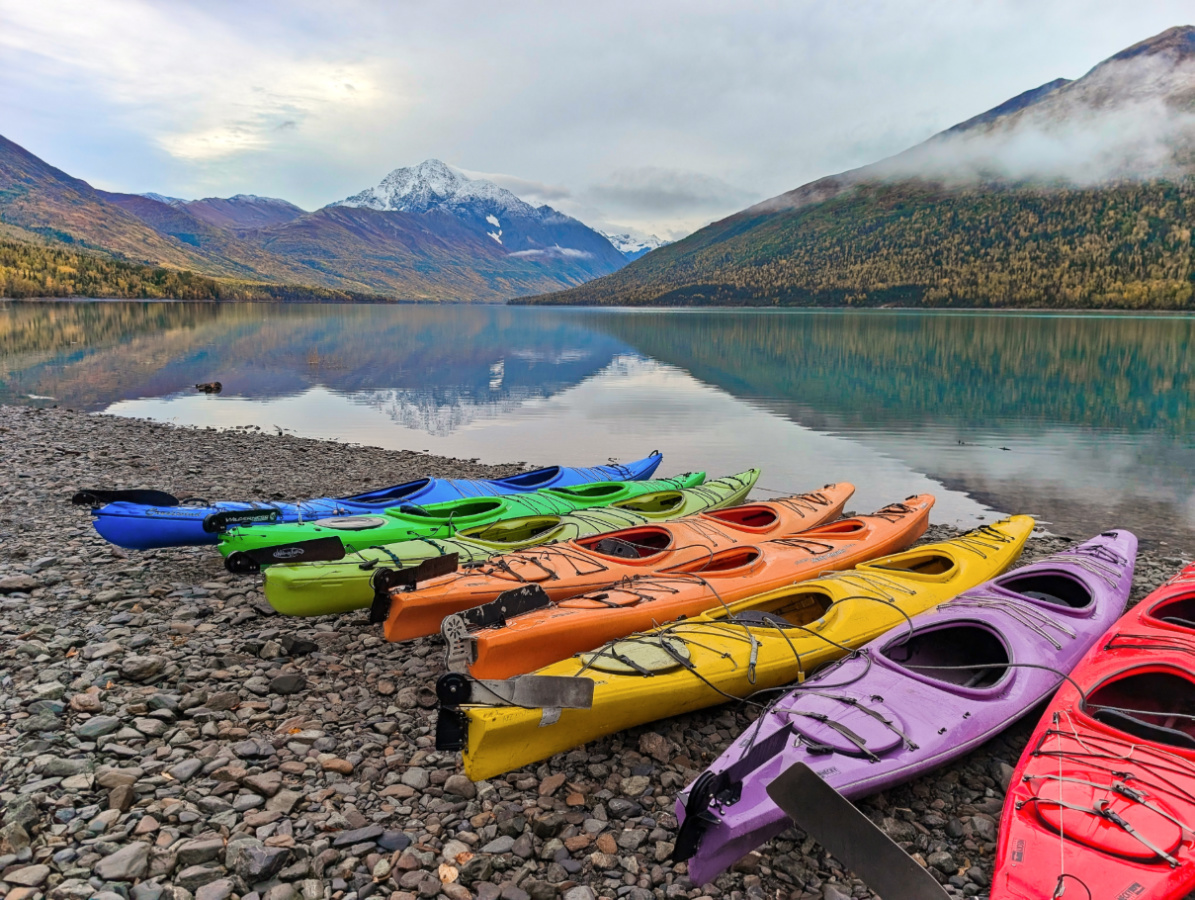
Getting to visit Alaska in winter is a blast and it’s so beautiful, but yes, it’s really cold and most visitors haven’t experienced this level of chill before. The key to having an enjoyable trip is being properly prepared, having the right winter gear and helpful layering strategies when you’re packing for Alaska winter travel. Whether you’re an adult heading to Fairbanks for Aurora Borealis viewing or if you’re a whole family heading to Anchorage to enjoy skiing and winter kayaking, many of the same winter packing tips apply.
We’ve put together our ten best tips that have gotten our family through many cold Alaskan days playing tourist and exploring in the snow. We’re all about comfort and safety, so if you listen to our advice (and adjust for your own needs) you’ll be all set. Packing for Alaska in the winter can be easy if you have a good packing list and process. If you have any questions about our recommendations or have suggestions to share yourself, please leave a comment or send us a note. We’re always happy to share more and help you plan a wonderful Alaska trip!
Packing for Alaska Winter Travel
Here are ten tips for packing and dressing for very cold Alaskan winter weather. Keep in mind that there are times during daylight hours that you’ll be very active and even though it’s freezing cold, you might get a little warm. Pay attention to our layering suggestions as that will help both for maintaining your body heat and being able to get comfortable during those warmer moments. Packing for Alaska winter trips means being thoughtful and ready to accessorize with cozy things.
Best Tips for Combatting Alaska’s Cold Weather
The key to packing for Alaska winter travel is having the gear for staying dry and blocking wind while trapping warm air close to your body. Alaskans often say “cotton kills” because wet clothing in extreme cold can lead to hypothermia quickly, and when cotton gets wet (including from sweat) it stays wet and gets cold. While our packing tips and dressing suggestions are not all encompassing of every weather situation or type of traveler, this is a very good starting point for what to pack for Alaska in the winter that has suited our family, including kids, very well.
Master the Layering System
The first thing to think about when dressing for the Alaska winter is layering as you dress. When you think about what layering clothing does to protect you and keep you warm, it makes good sense. Use three layers:
- a base layer against your skin
- an insulating mid-layer
- and a waterproof/windproof outer shell.
This system traps warm air and lets you adjust as activity levels change. If you’re having a really active winter visit that includes snowshoeing or skiing, you’ll work up a sweat and may need to adjust your layers, but when it’s just cold and your blood’s not pumping yet, you’ll be really glad to be warm.
Choose the Right Base Layer Materials
So if you’re not supposed to wear cotton when you’re packing for Alaska in the winter, what should you wear? Merino wool is the gold standard for warmth, moisture management, and odor resistance. It stays warm even when it gets damp. Synthetic materials like polyester or polypropylene are also excellent, dry faster than wool, and cost less, but Merino wool is the #1 pick for our family. Just remember to never use cotton as a base layer since it retains moisture and will make you dangerously cold.
Also, when you’re getting socks to wear in Alaska in the winter, still the Merino wool is the winner. You can often be plenty warm with just one pair of these socks if you have good, warm boots. Putting another type of fabric sock underneath a pair of wool socks doesn’t really do any good.
Invest in Serious Insulation
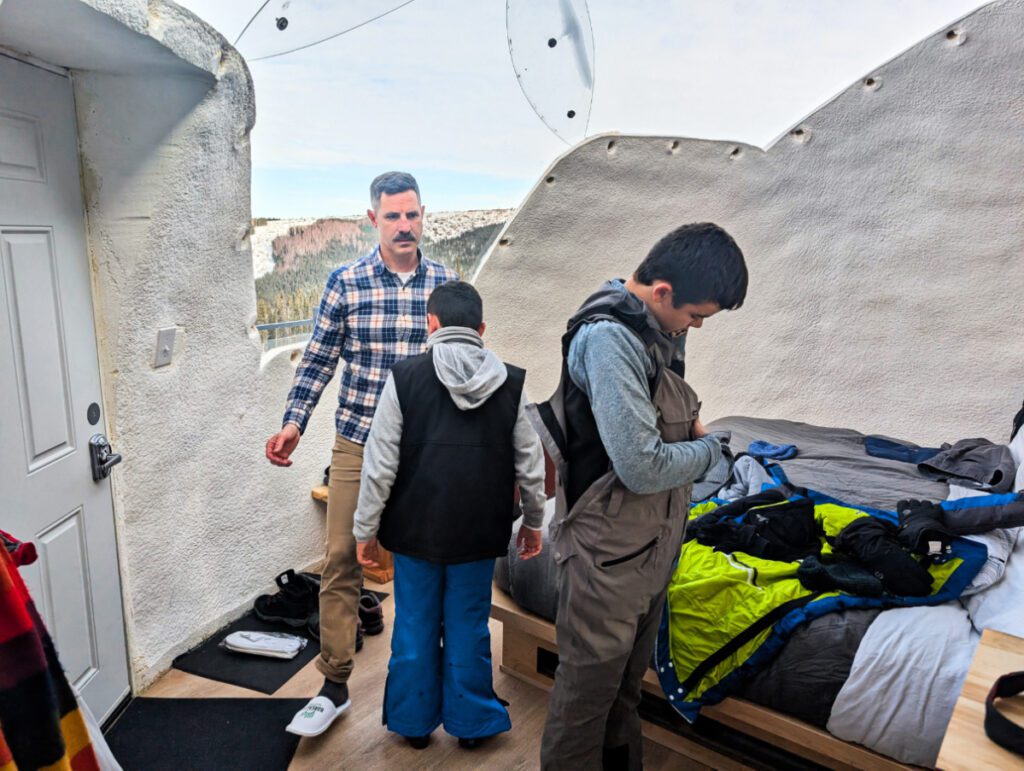
Now that you know you need good Merino wool for what to wear in Alaska in winter, the next layer is pretty important too. For mid-layers, down provides the best warmth-to-weight ratio in dry conditions, while synthetic insulation (like PrimaLoft or Thinsulate) performs better in wet conditions and costs less. Knowing that you may get toasty once you put that next layer on, a thin down puffer works really well under the bigger winter coat and over your wool layer.
We’ve also found that thick fleece is a great second layer, both for the top and for pants. It’s easy to just think about your upper body, but your legs do need to stay warm too.
Ensure Your Outer Layer Blocks Wind: Jackets and Pants
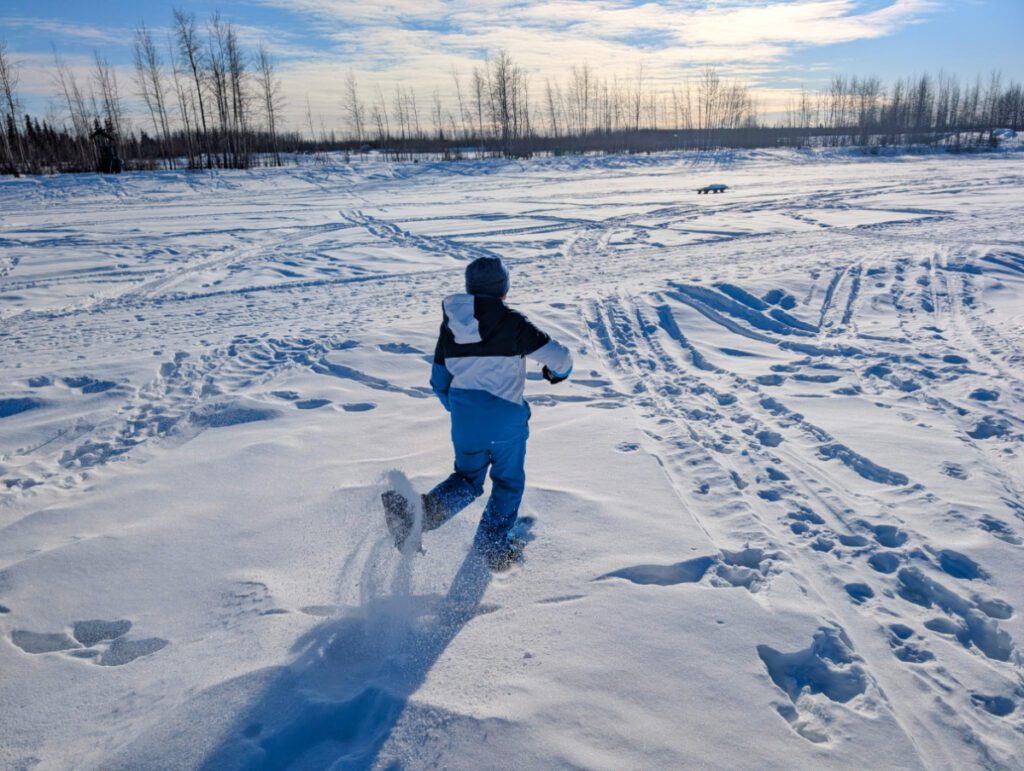
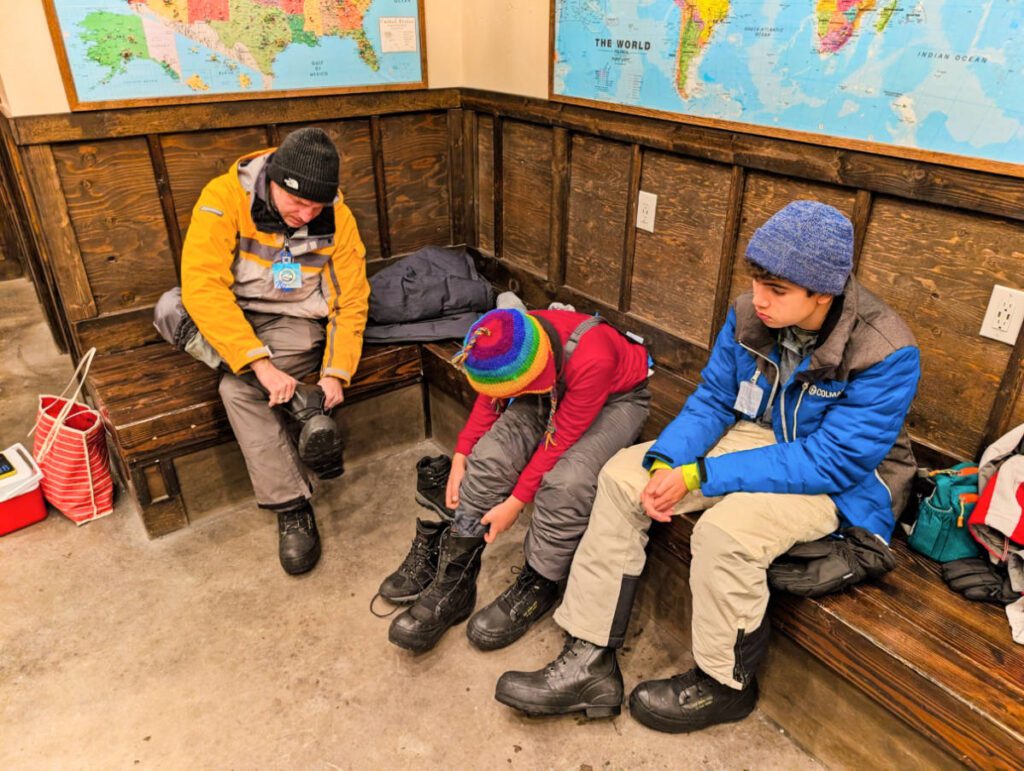
Even for people not planning on laying in the snow and making snow angels, you’ll still want to be able to protect yourself from the cold and snow, both in forms of precipitation and wind factors. Wind chill dramatically increases heat loss. Your outer jacket and pants should be windproof and ideally waterproof, with features like adjustable cuffs, a good hood, and a high collar. We were snow pants 99% of the time (I love my snow bibs) and usually only wear our extreme cold rated ski jackets.
If you’re buying a new cold weather jacket or snow pants, look for products that have good insulation. I know that you’ll be wearing other layers for your outdoors experiences during a winter visit, but adding the extra warms just below the wind blocking layer really makes a difference in comfort.
Protect Your Extremities
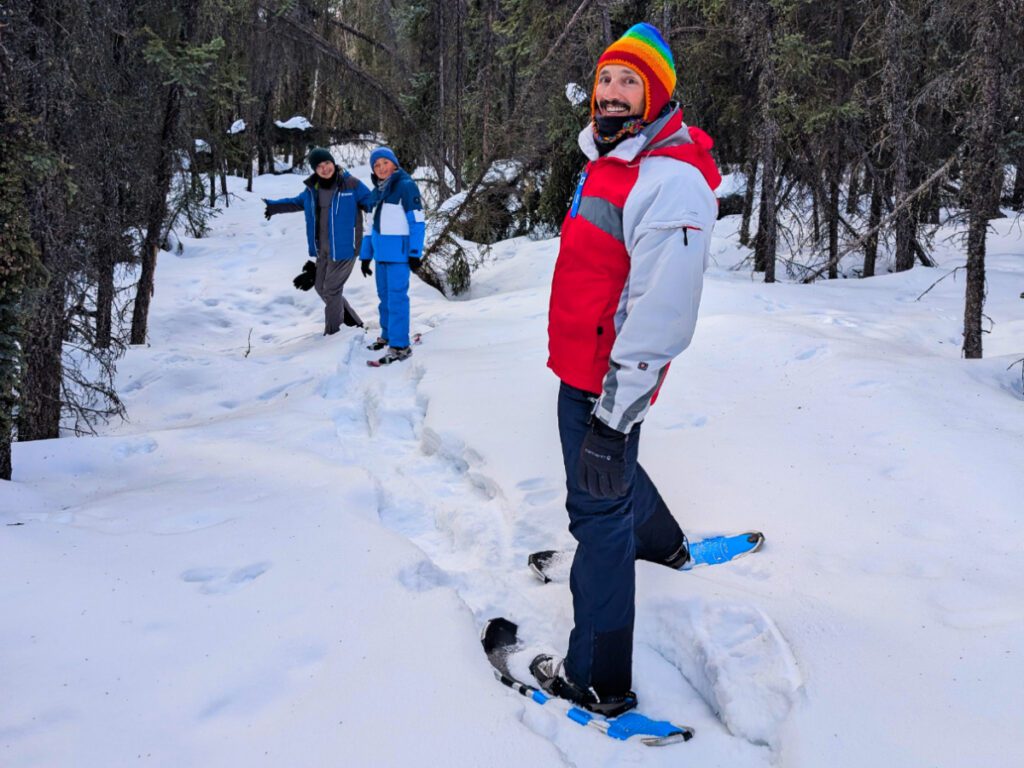
I’m bald, so I always have a layer on my head, but my kids have the thickest hair and they don’t think about hats unless I remind them. You lose significant heat through your head, hands and feet. Bring a warm hat that covers your ears even if you have a lot of hair. Wool or very puffy synthetic socks are also very important. We like to wear wool socks and then attach air-activated toe warmers to the undersides before putting on our boots. In -15 degree weather it makes a huge difference.
Insulated gloves or mittens (mittens are warmer) are very important and should be waterproof. Also, you should consider packing liner gloves (thinner ones) so you can remove your outer gloves/mittens briefly without exposing bare skin. Glove liners work wonders for keeping the insides of your outer gloves dry. I know that sounds weird but when the cold is so extreme that it starts to work its way through the outer glove, condensation forms and the inside of the glove gets wet… and then it smells terrible!!!
Don’t Forget Face Protection
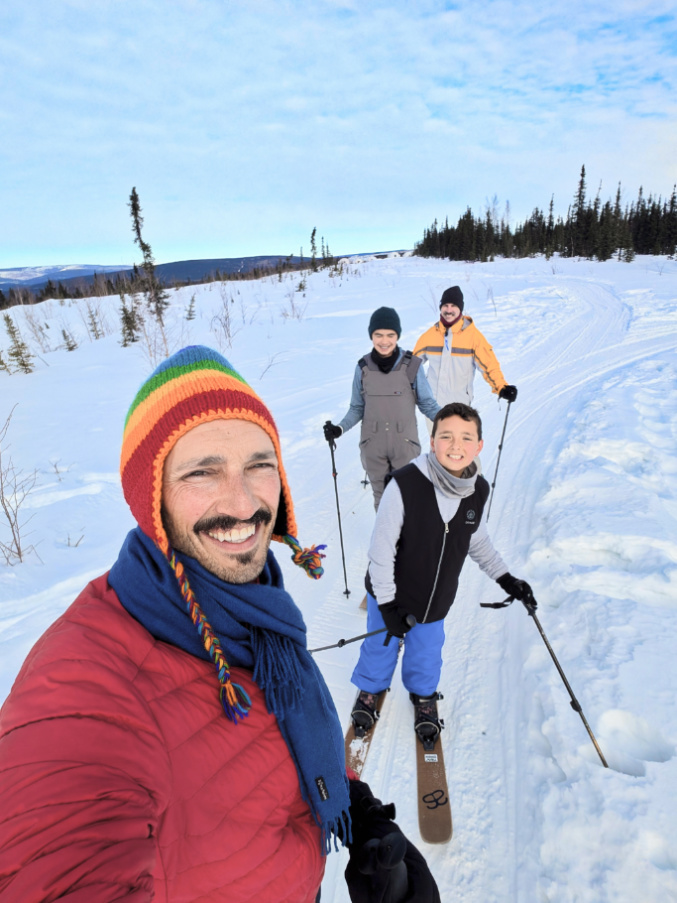
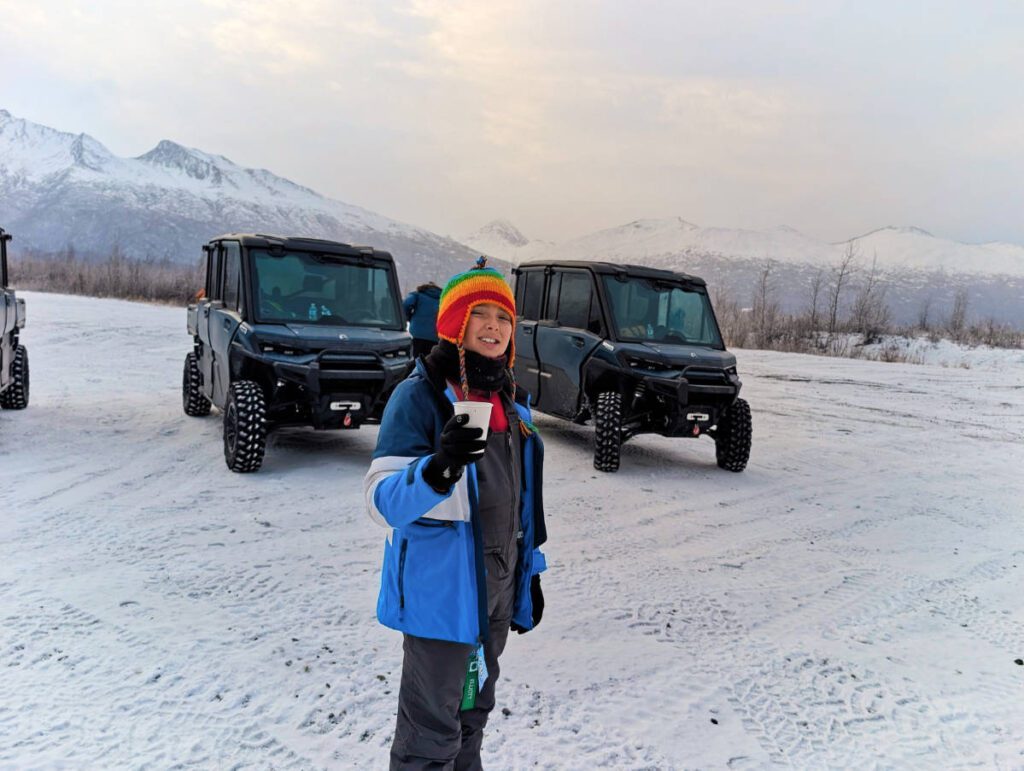
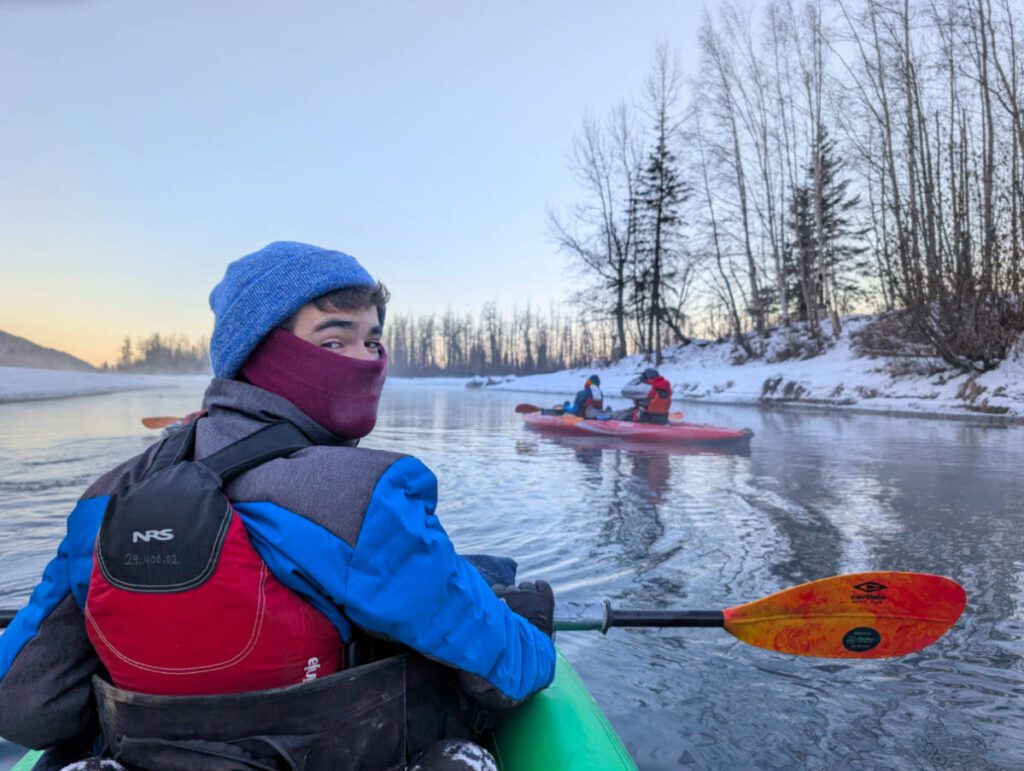
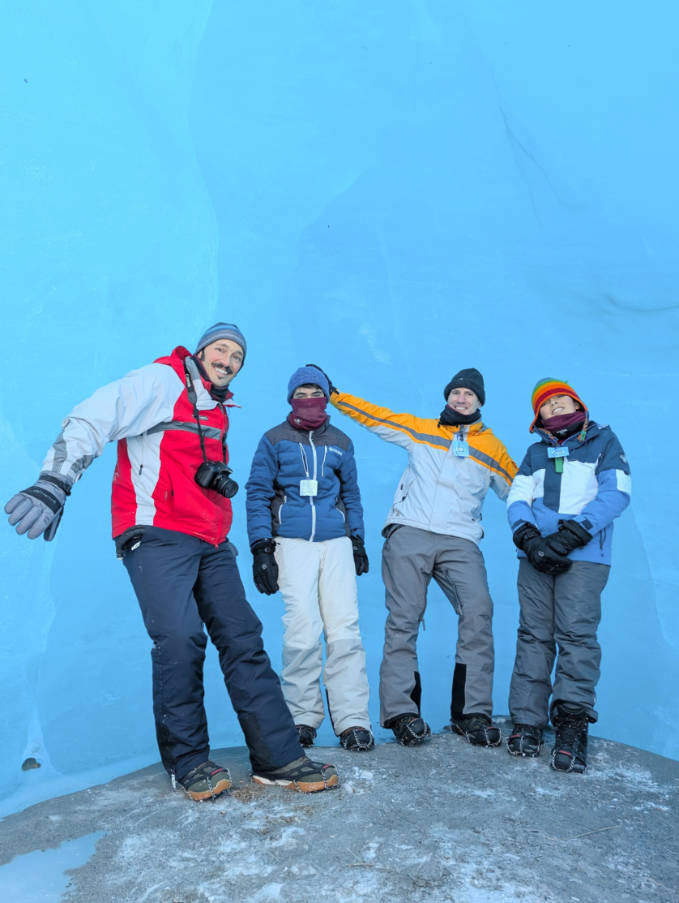
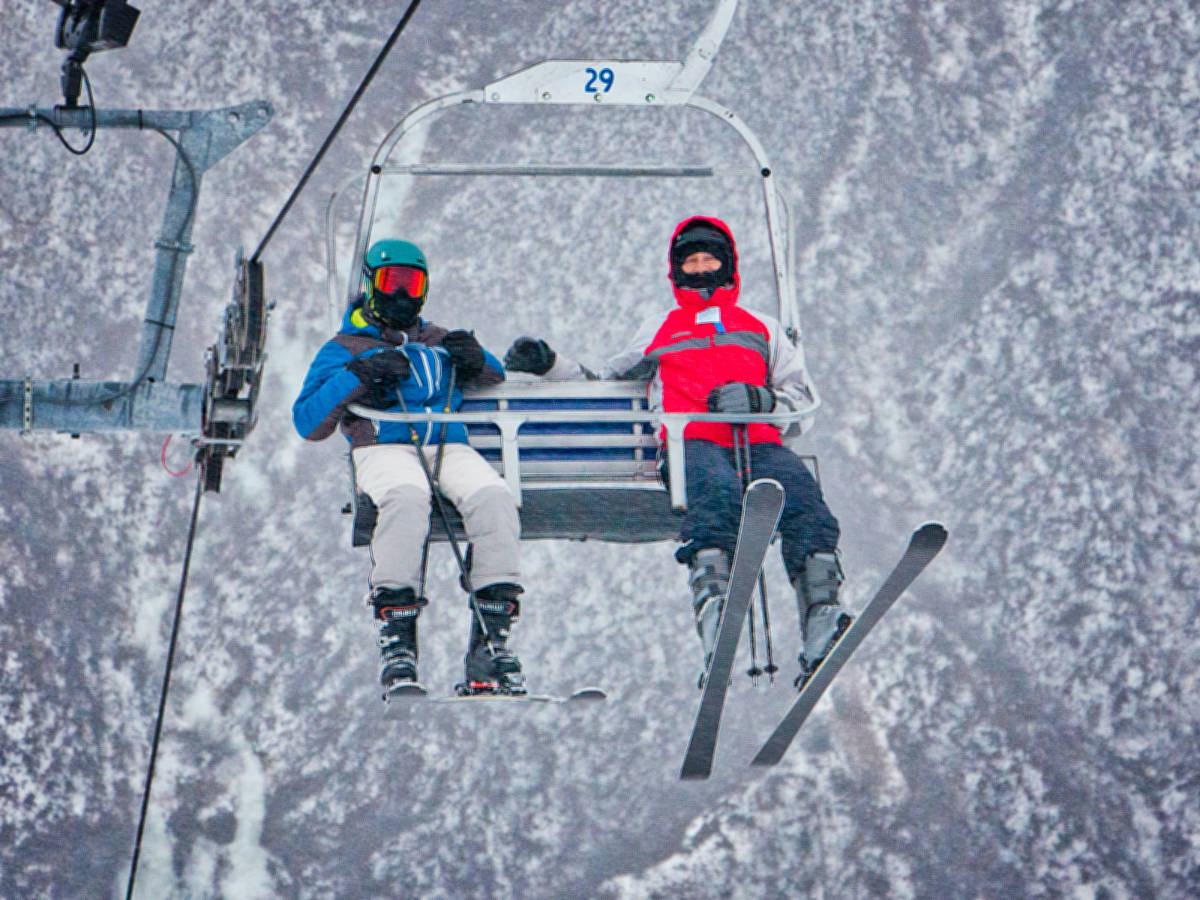
So, before you say to yourself “I’ve got the most beautiful scarf I’ll wear…” think twice. Yes, scarves are fantastic and you should for sure bring one or two, but you also are going to want something that actually protects your face, especially if you’re skiing or doing any snowmobiling. When you think about what to wear in Alaska in winter, always first think about FUNCTION. A balaclava, neck gaiter, or buff protects your face and neck from windburn and frostbite. Some people prefer a combination of a warm hat and separate neck gaiter for versatility, but we really like the pieces that cover you full neck and can tuck into you shirt, and then also go up to cover much of your face and head. We were hiking in Denali National Park in winter and the wind was insane. Thankfully we knew what to wear in this extreme cold of AK.
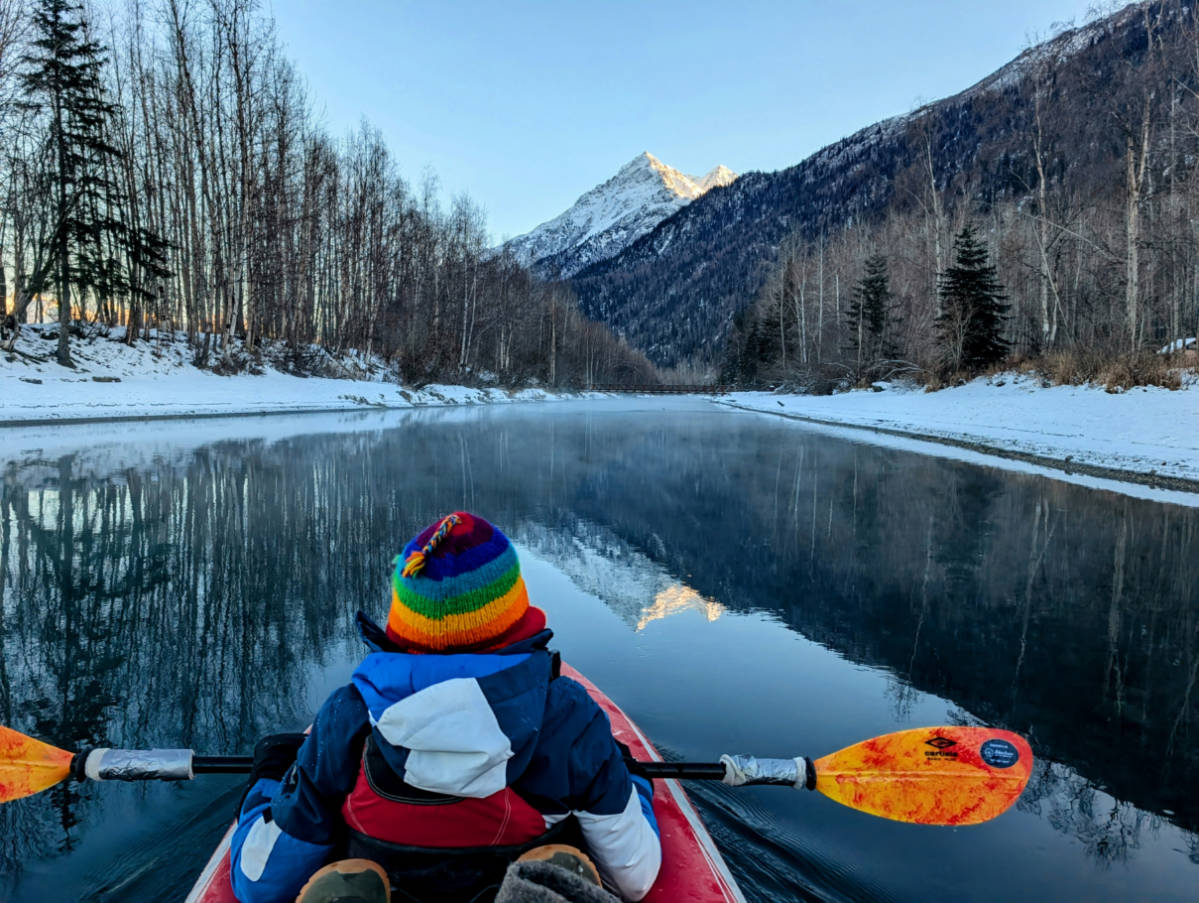
Now, having said that, if you need to be fashionable, when you’re packing for Alaska in winter be sure to put in a few colorful scarves and hats that can serve the purpose of both being warm and adding some color to your pictures. If you’re heading to Fairbanks and know that you’re going to be surrounded by all white snow all the time, mix it up with some rainbows or warm colors to make your photos pop. You can be warm AND look good.
Choose Insulated, Waterproof Boots
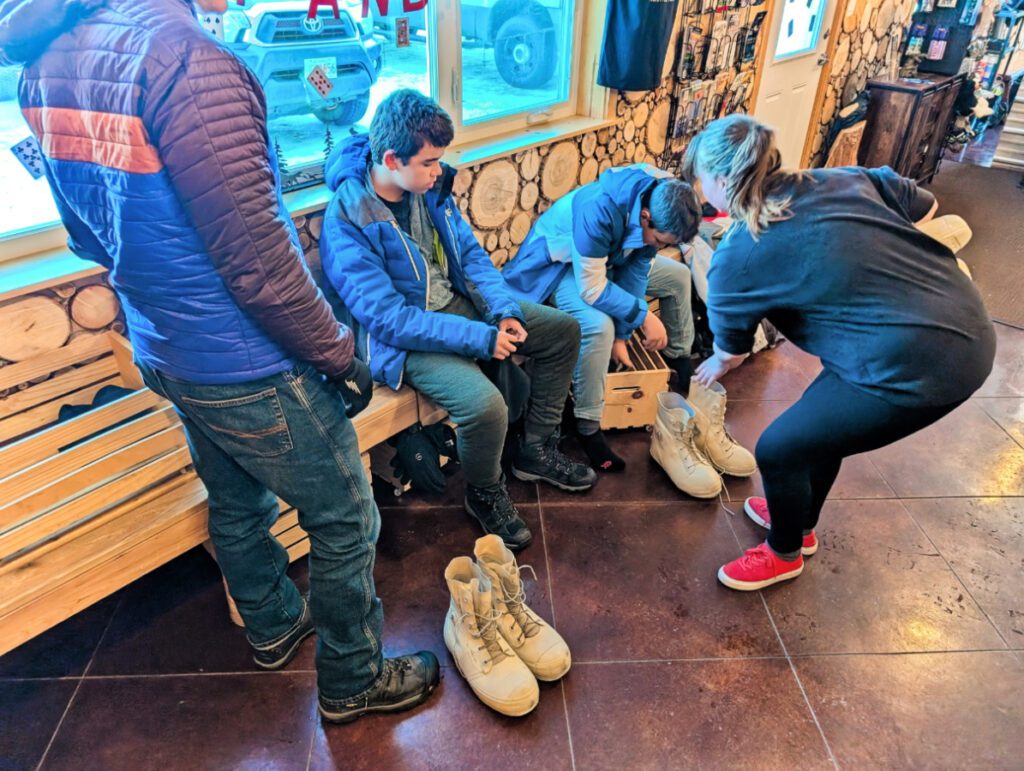
Hiking boots in general are not what you want to pack for winter in Alaska. Now, if you’re coming up in summer and are planning on exploring Hatcher Pass and spending a few days in Denali National Park, yes, bring your hiking boots. But if you need to know what to wear for winter in Alaska, look for boots rated to at least -40°F with good tread for ice. They should be roomy enough to wear thick socks without restricting circulation. Pac boots or bunny boots with removable felt liners are popular in Alaska, but those are an investment.
Note: if you’re planning on doing fun winter tours during your visit, a lot of tour guides and companies have certain winter gear for guests to use, and that often includes bunny boots. These boots fit very loosely and are amazing for creating a warm air layer around your feet. We’ve gone out with Alaska Backcountry Adventure and Rod’s Alaskan Guide Service for different tours and they had lots of top rated gear for tour guests to use.
Pack Extras of Critical items
Usually I’m somebody that packs the absolute minimum for any sort of trip, but when I think about what to pack for winter in Alaska, I always make sure that we all have extras of important things. Bring backup gloves, socks, and base layers. If something gets wet or lost, you’ll need replacements immediately. The backup glove liners have been a lifesaver for us many days due to the condensation issue I mentioned.
Even though snow pants stay really clean, when you’re packing for winter in Alaska, pack an extra pair if you have them. This is helpful incase you have some sort of issue or if you just want to change up what you’re wearing in photos. Our pictures look like everything we do in the Alaskan snow all is on the same day because we just wear the same outer gear all the time. It’s nice to mix it up.
Protect Your Eyes and Skin
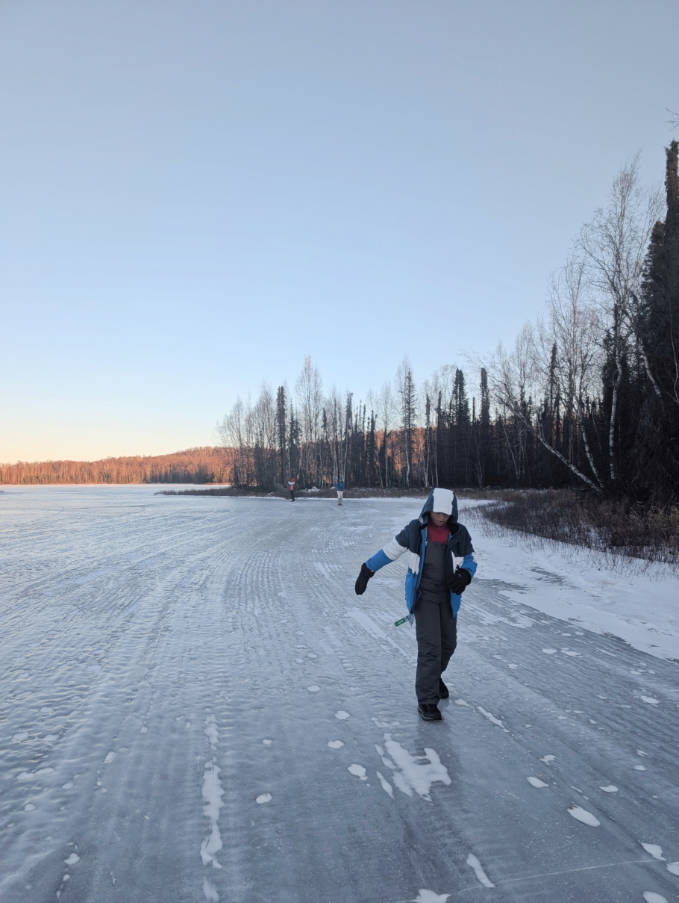
My least favorite physical sensations are when my teeth and eyes get extremely cold. Sunglasses or goggles prevent snow blindness and shield against wind. Even if you don’t have big mountain top trekking plans, there are days when the wind picks up and the temperatures drop, and then your eyes just hurt. Protect them! Also, bring high-SPF sunscreen and lip balm since sun reflects intensely off snow. This also helps with the wind.
For your face, the best protection you can pack for Alaska in the winter is a ski mask or balaclava, as mentioned before. Keep your face well moisturized in addition to protecting it from contact with the cold air. The extreme cold of AK in winter zaps the moisture from your body, so drinking a lot of water and remoisturizing throughout the day is key.
Use Hand and Toe Warmers
I don’t like making trash, but one product we diligently use when we’re doing outdoor activities in the intense cold is disposable warmers. Disposable heat packs are lightweight and work well against extreme cold, especially during less active periods. We usually put them in our pockets and the smaller ones in the palm of our gloves. We use the toe warmers with stickum on them to adhere them to the correct place on our socks. They really do make a big difference.
Tip: when it’s really cold, keep your cell phone near one of the warmers in your pockets to keep the battery from draining quickly. Yes, the cold will kill your cell phone charge like you wouldn’t believe.
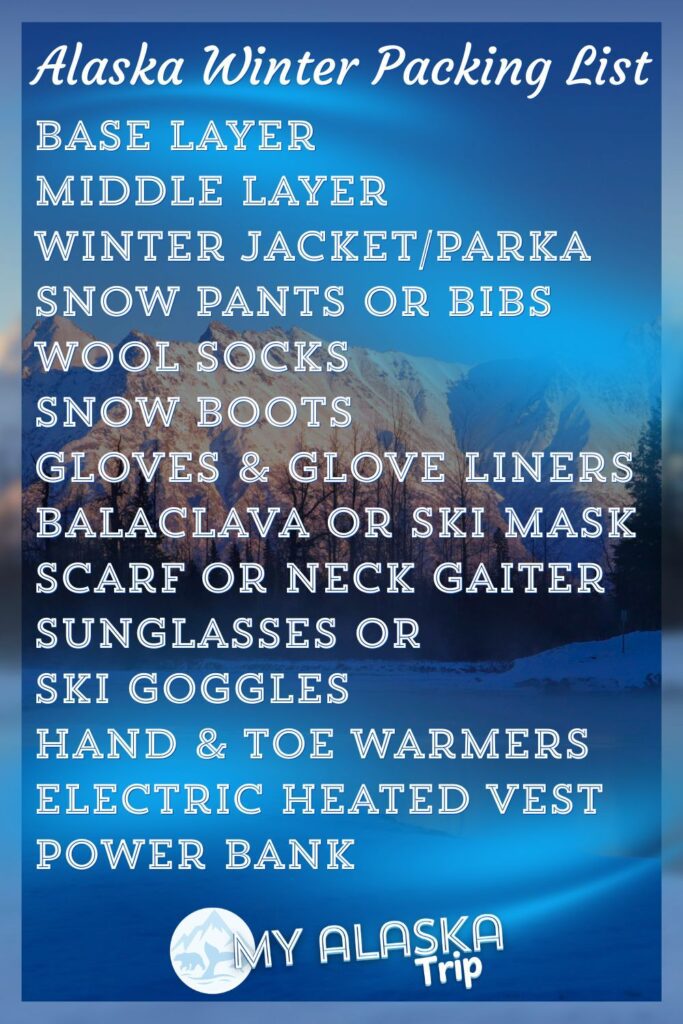
Alaska Winter Travel Packing List
Here is our packing list and what we always recommend to others when they’re packing for an Alaska winter trip, or even Maine in winter, because it gets pretty freezing cold up there too. Remember that you don’t necessarily have to go out and buy all new stuff, but there may be some items that you will find invaluable both as you dress for an Alaska winter day and for the general cold weather wherever you call home.
We’ve noted the importance of each item to pack for your trip, and you’ll likely wear them all. If there’s one place you can pack LESS consider the regular everyday clothes you would wear out to meals and such, and maybe plan to double up on outfits when possible. (affiliate links below)
- Base Layer – this should be long Johns or sorts, either made of Merino wool or thick, breathable synthetic fabric **MOST IMPORTANT
- RECOMMENDATION: Merino wool base layer MENS Merino wool base layer WOMENS or via REI
- Middle Layer – these are the clothes that you would be wearing if you were just dressed to be warm on a cold day (pants, sweaters, flannel shirts…) **IMPORTANT, but items are negotiable
- RECOMMENDATION: REI Flannel Shirts
- Top Layer – your winter jacket/parka and your snow pants or bibs **MOST IMPORTANT
- Wool Socks – have enough for each day, knowing that you may double up sometimes so may re-wear socks that are still clean **MOST IMPORTANT
- RECOMMENDATION: Merino wool hiking socks on Amazon or Shin high Merinos on REI
- Snow Boots – extreme cold rated boots that are ideally waterproof are best **IMPORTANT, but some tour companies also provide these for the more intense tours
- RECOMMENDATION: Hot Bear Boots — I have these one exactly and they’ve been amazing and they’re VERY INEXPENSIVE
- Gloves and Glove Liners – extreme cold rated gloves or mittens are key, with mittens being the warmer option. Don’t think you wont need glove liners, because you do **MOST IMPORTANT
- RECOMMENDATION: Extreme cold MITTENS via REI or via Amazon
- Balaclavas, ski masks, neck gaiters – choose function over form opting for the best coverage to prevent cold air going down your jacket **IMPORTANT but variable per person and per jacket
- RECOMMENDATION: This Merino wool balaclava is amazing on REI
- Scarves – these both serve to keep you warm and to add color and variety to your winter wardrobe **not important, but fun
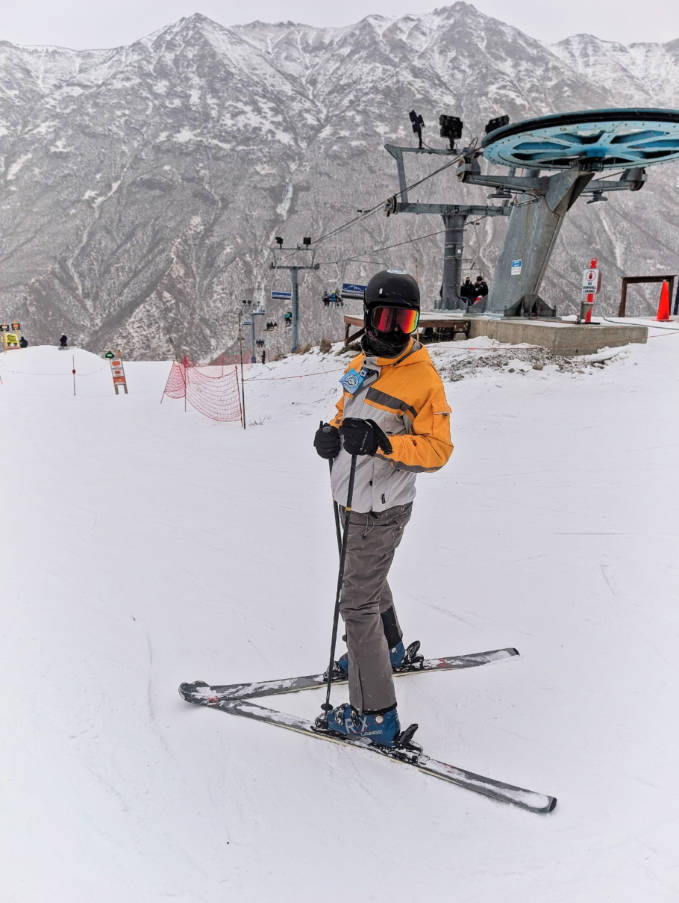
- Sunglasses or Ski goggles – sunglasses are fine for most people, but if you’re visiting the Alyeska or Skeetawk Ski Areas, you’ll want goggles **IMPORTANT depending on your activities
- RECOMMENDATION: These ones are great for swapping out lenses
- Hand and Toe Warmers – you can either pack these or purchase disposable ones when you arrive in Alaska **not imp0rtant because you can easily buy them on location
- RECOMMENDATION: HotHands Rechargeable hand warmers
- BONUS: Electric Heated Vest – if you are planning late nights outside watching the Northern Lights, you’ll want a heated vest. Standing around is cold and the vest makes all the difference **IMPORTANT for late night outdoor activities
- RECOMMENDATION: Heated vest with battery pack
- Power Bank – the extreme cold of Alaska drains cell phone and camera batteries very quickly, so having a power bank is nice to ensure you can keep taking pictures or communicating **nice to have, but not required
- RECOMMENDATION: This one is great and carries several recharges
Besides your standard packed items like toiletries and underwear, this packing list should have you all set to be well prepared for traveling in Alaska in the winter.
Suggestions for Things to Do in Alaska in Winter
You really will fall in love Alaska in the winter. There are fun and beautiful things to do, and you can take in some of the most incredible landscapes and scenery that’s different from what you’ll see in the summer. We have lots of suggestions for fun things to do in winter in Alaska, so take a peak and plan something awesome!
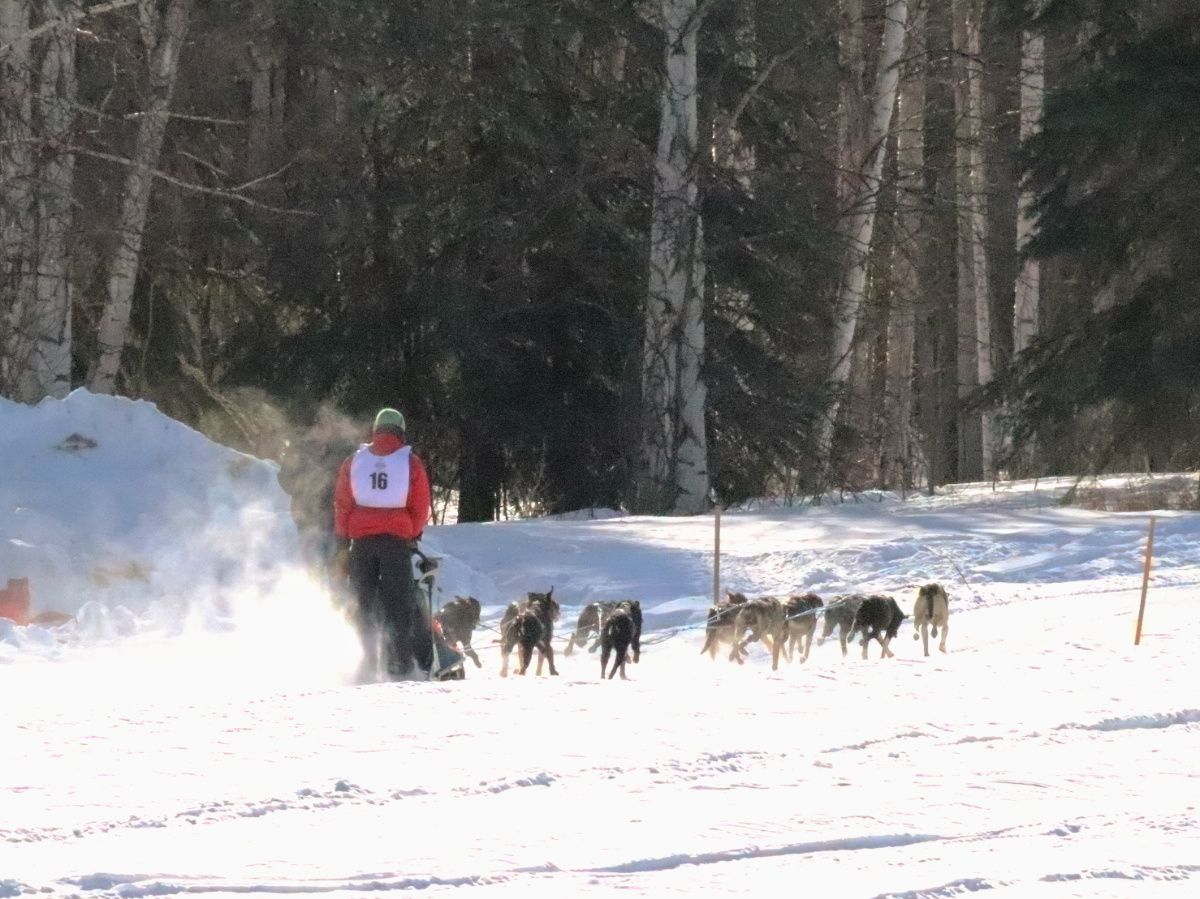
I hope you’re excited to experience Alaska in the winter and you’re confident in what to pack and what you’ll be wearing in the extreme cold. Between the beautiful views and sense of Alaskan adventure with each experience, I know you’ll love it. If you have any questions about visiting AK in either the winter or summer, please leave a comment or send us a note. We’re always happy to help with travel planning for an Alaska Trip!